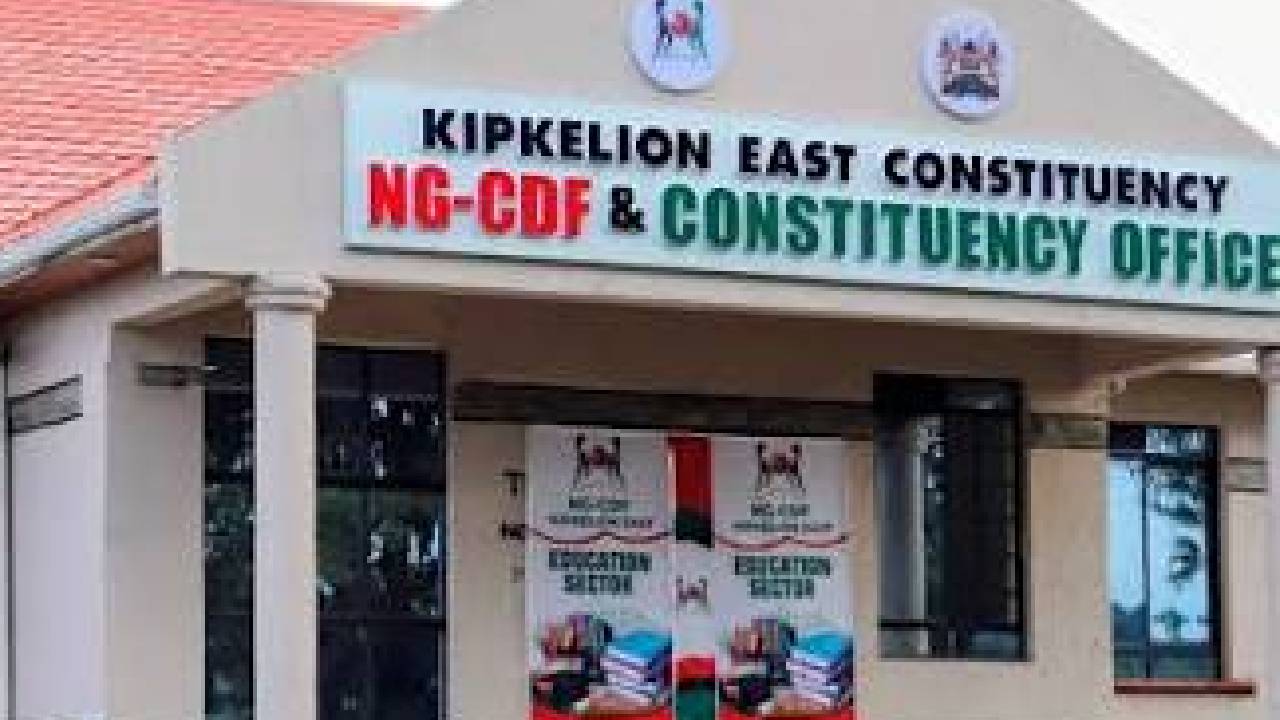
NG-CDF’s governing legislation builds in a structured public-participation cycle, alongside newer social-protection and climate mandates, but it is the Fund’s audit and accountability record that continues to dominate public debate.
Statutory public participation
Under Section 27 of the NG-CDF Act, the chairperson of each Constituency Committee must convene open ward-level public forums (barazas) within the first year of a new Parliament and at least once every two years thereafter.
Proposals gathered at these forums are reconciled with the Medium-Term Plan under Kenya Vision 2030, individual Constituency Strategic Plans, and the Sustainable Development Goals to produce each year’s implementation schedule, which then goes to the NG-CDF Board for approval and direct disbursement to Project Management Committees.
Health and climate mandates
• Universal Health Coverage support: the Fund finances health-insurance premiums for vulnerable households, covering an average of about 29,870 families a year against medical indigence.
• Climate mitigation: December 2023 amendments allow constituencies to spend up to 5 percent of their annual allocation on climate initiatives such as afforestation, reforestation, tree-nursery establishment and conservation campaigns.
From the 2016/17 financial year to date, the Fund has channelled an estimated Ksh 3.35 billion into environment-sector activities across the 290 constituencies.
Audit framework, and where it is straining
On paper, NG-CDF is subject to multiple layers of oversight: annual audits by the Office of the Auditor-General reported directly to Parliament, continuous transactional review by sub-county internal auditors answering to the National Treasury and the NG-CDF Board, and performance contracting with annual targets cascaded to all 290 constituency offices.
The Court of Appeal’s February 2026 ruling leaned heavily on the existence of these mechanisms in finding the Fund constitutionally sound.
In practice, recent Auditor-General reports have catalogued significant gaps in how that oversight functions at constituency level. Beyond the bursary documentation problems described above, auditors have flagged unsupported expenditure on items such as environmental projects and domestic travel, projects paid for in full but left unfinished on physical inspection, including a laboratory at a primary school in Rongo constituency and multiple classroom projects in Embakasi East, and missing bank reconciliation records covering tens of millions of shillings in Webuye East.
The National Assembly’s Decentralised Funds Accounts Committee has largely attributed these failures to Fund Account Managers rather than to MPs, a division of responsibility that remains contested given MPs’ central role in project selection and constituency-level oversight.
Taken together, the Fund’s persistent operational challenges are the same ones identified years ago, rising demand for bursaries that outstrips the Ksh 15 billion annual allocation, capacity constraints within local Project Management Committees, litigation over statutory boundaries (now including the constitutionality question itself), and maintenance backlogs for facilities such as digital hubs that are built but not yet staffed by line ministries.
What has changed is the stakes: with the Fund’s constitutional status still pending before the Supreme Court and a parallel entrenchment bill awaiting the Senate, how these operational problems are, or are not, resolved may influence the broader legal and political case for NG-CDF’s survival beyond June 2026.