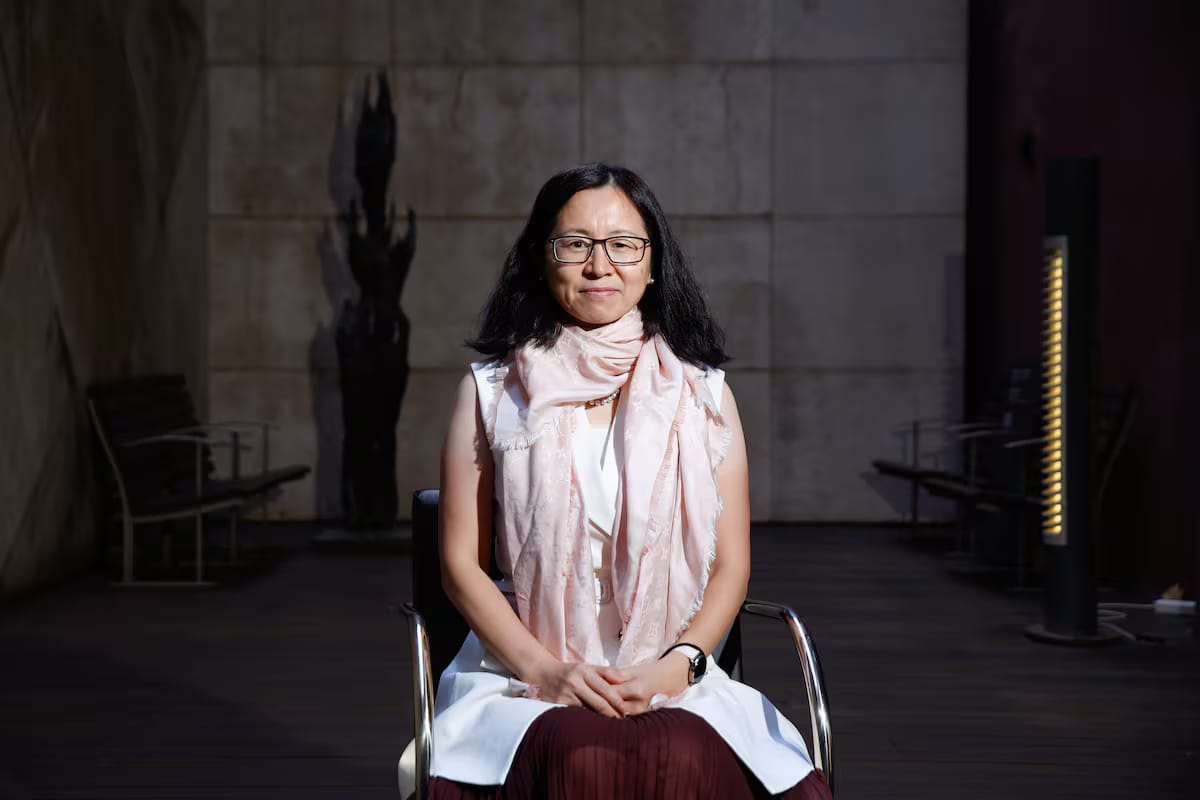
Chinese biologist Hongmei Wang pushed one of the most controversial questions in reproductive science into the spotlight: can the human menstrual cycle be slowed down, perhaps to once every three months, and by doing so, extend a woman’s fertile years? The idea has sparked debate worldwide, blending hard science with deep ethical, biological and societal questions.
Wang works at the State Key Laboratory of Stem Cell and Reproductive Biology in Beijing, an institution historically linked to family planning research but now focused on understanding human fertility at its most fundamental levels. Her work comes at a time when China, like many nations, is facing a sharp decline in birth rates and an aging population, pressures that have made fertility extension a hot topic in scientific and policy circles.
At the heart of Wang’s research is a simple but provocative question: if the female body could experience fewer menstrual cycles over a lifetime, could this slow down the depletion of eggs? Unlike men, who produce sperm throughout life, women are born with a fixed reserve of oocytes (eggs), and that reserve declines with each cycle until menopause.
By reducing the number of cycles, from roughly a dozen per year to only four, Wang hypothesizes there might be a way to preserve that reserve and delay the onset of reproductive aging.
There’s some early evidence to suggest this line of thinking isn’t purely speculative. Wang and her team have made significant strides in related stem-cell work, including experiments in which human stem cells were implanted into the ovaries of sterile monkeys, resulting in a healthy baby monkey, a result the scientist cites with pride.
A small human trial with 63 women suffering premature ovarian failure also showed that stem cell transplants helped four participants conceive healthy children. These results, while encouraging, come with huge caveats and do not by themselves demonstrate that menstrual slowing would extend fertility.
Despite the enthusiasm, Wang doesn’t hide the uncertainties. The biological mechanisms governing ovulation, hormone production and ovarian aging are deeply complex. Her own work in animal models, like mice, suggests manipulating cycles might be possible, but carries potential risks.
Suppressing ovulation, a key part of reducing frequency, also suppresses estrogen production, a hormone essential not only for reproduction but for overall health. Long-term reduction of estrogen could lead to other health issues, including bone density loss and cardiovascular effects, and these consequences are not fully understood.
The scientific community also faces practical and ethical barriers. For centuries, research into human embryonic development, from fertilization to early growth stages, has been limited by both technical challenges and legal restrictions.
Most countries restrict laboratory studies of human embryos beyond the first 14 days, precisely the window when key developmental processes unfold. Wang and collaborators are working around these limits with embryonic models made from stem cells, but even these approaches raise questions about how far science should push.
Public reaction to the work has been mixed. Some see potential societal benefits, especially in an era where many women delay childbearing for education or career goals and face narrowing fertility windows.
Others, including scientists not involved in the study, caution that menstrual frequency and fertility lifespan aren’t as directly linked as the theory suggests, noting that the biology of ovarian aging involves more than just the number of cycles. There are also cultural and personal dimensions, not everyone would want to alter such a deeply natural process even if it were possible.
At the moment, Wang’s ideas remain at the frontier of reproductive biology rather than established clinical practice. What’s clear is that understanding how the reproductive system ages, and whether that aging can be slowed or altered, remains one of the most intriguing and contentious questions facing science today. Whether menstrual cycles can ever safely occur only four times a year, and whether that would translate into prolonged fertility, is a question still very much to be answered.