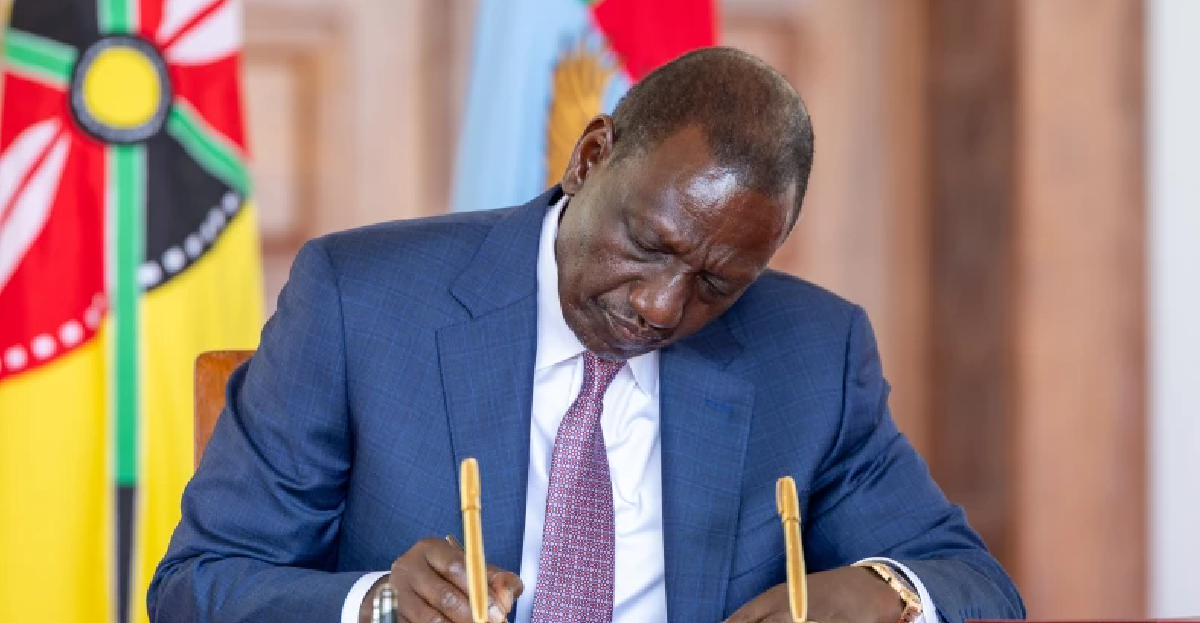
As President William Ruto prepares to sign the Finance Bill 2026 into law on June 23, the legislation has once again become a focal point of intense political debate and public scrutiny.
While the government has defended the bill as necessary to sustain economic growth and fund key development programmes, critics argue that it places an additional burden on citizens already grappling with a high cost of living.
Supporters of the bill, particularly members of the Kenya Kwanza administration, maintain that the measures introduced are aimed at increasing government revenue without introducing overly aggressive new taxes.
They argue that Kenya must strengthen its domestic revenue collection to reduce dependence on external borrowing and finance critical sectors such as healthcare, infrastructure, education and social protection programmes.
However, opposition leaders have accused the government of failing to adequately address the economic hardships facing ordinary Kenyans.
They contend that although some controversial tax proposals were dropped during parliamentary deliberations, the overall bill still reflects a disconnect between policymakers and citizens struggling with inflation, unemployment and rising household expenses.
The political atmosphere surrounding the bill remains sensitive, especially after the nationwide anti government protests witnessed in 2024 and 2025, which were largely triggered by public dissatisfaction with previous finance legislation.
Political analysts say the government is walking a delicate balancing act between maintaining fiscal discipline and avoiding decisions that could reignite public anger.
Among the public, reactions remain divided. Some Kenyans acknowledge the need for increased government revenue but insist that transparency and accountability must accompany any additional financial measures.
Many have questioned whether collected taxes are being utilised efficiently and have called for greater efforts to curb corruption and wastage in public expenditure before introducing policies that may indirectly affect citizens.
On social media platforms, discussions have been dominated by concerns over affordability and economic inequality.
Young people, who have become increasingly vocal in national conversations, continue to demand meaningful public participation and greater inclusion in decision making processes.
Many argue that economic policies should prioritise job creation and lowering the cost of living rather than focusing primarily on revenue generation.
Economic experts have also weighed in, noting that while fiscal reforms are necessary, their success will depend on implementation and public trust.
They say sustainable economic growth cannot be achieved through taxation alone and must be accompanied by measures that stimulate investment, expand employment opportunities and improve service delivery across the country.
As the Finance Bill 2026 awaits presidential assent, its long term impact will ultimately be judged by its effect on the daily lives of Kenyans.
Whether it becomes a tool for economic recovery or another source of public frustration will depend on how effectively the government addresses concerns raised by both political leaders and citizens in the months ahead.