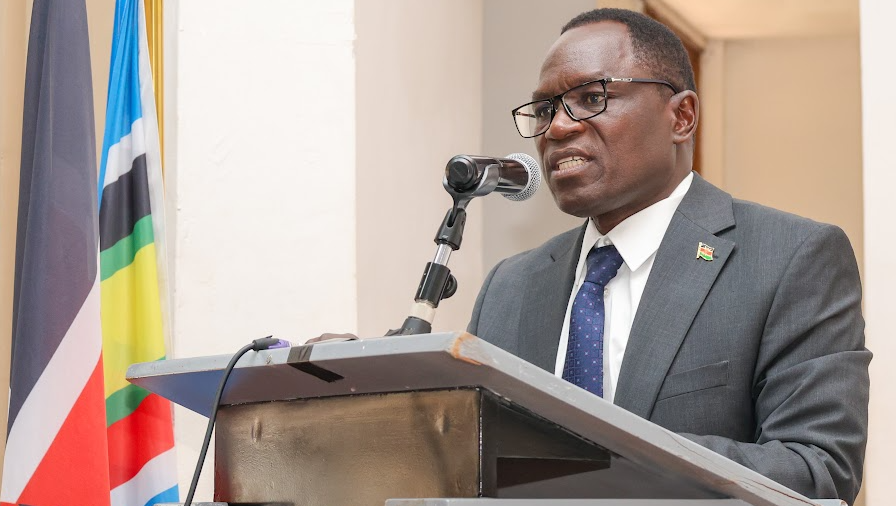
Govt to tackle misinformation through coordinated communication as Isaboke Unveils New Measures to Rebuild Public Trust
The government has directed Ministries, Departments and Agencies (MDAs) to integrate communication into their programmes and projects to enhance public understanding of government initiatives and restore public trust.
Principal Secretary for Broadcasting and Telecommunications, Stephen Isaboke, said communication should no longer be treated as an afterthought but as a core component of government operations, with Cabinet Secretaries, Principal Secretaries and heads of agencies taking greater responsibility for explaining their work to the public.
Isaboke made the remarks while officially opening a two day National Information and Public Communication Officers Sensitisation and Coordination Forum on Tuesday, 15th September at the Kenya Institute of Curriculum Development (KICD).
The meeting brought together more than 250 government communication officers and senior officials from across all MDAs. The forum was themed “Strengthening Coordinated, Proactive, and Responsive Government Communication.”
The PS pointed to the implementation of the National Communication Policy 2026 as key to achieving coordinated, harmonised and unified government communication.
The policy provides for clearer structures of accountability, adequate resourcing of communication functions, crisis communication planning, and greater use of traditional and digital media. It also requires that communication plans be incorporated into Performance Contracting across government.
“We need coordinated, harmonised and unified communication so that if the CS is speaking, someone else is speaking the same thing. It is not someone saying something and someone else contradicting,” Isaboke said.
He said communication officers should work closely with the leadership of their MDAs and serve as trusted advisers on messaging, public engagement and crisis response.
“You must have the knowledge of the team. In fact, the right-hand person of the CS, the PS, or the CEO, because then you will manage or advise what they should say, how they should say it, or even how to deal with any crisis,” he said.
Isaboke identified weak government narratives, inconsistent and uncoordinated messaging, misinformation, disinformation and fake news as among the challenges eroding public confidence.
Among the new measures announced, the PS said the government is strengthening the National Communication Centre (NCC) as a central coordinating entity and repository for government information, tasked with receiving, collating, validating and preparing government information for dissemination, while also supporting public sentiment analysis through artificial intelligence tools.
He also disclosed that the government is exploring an integrated public communication platform through which citizens could access information on government programmes, projects, services and statistics from a single source. “We are testing the idea of having a website that can actually integrate public communication,” he said, adding that citizens should not have to search through multiple platforms for information on ministries, agencies and government programmes.
Isaboke called for communication to be factored into the planning and budgeting of major government projects from inception rather than introduced after implementation begins. “Every venture project must have communication methods. You just can’t do it by discovery. You must always communicate that from the beginning,” he said.
On crisis management, the PS said the National Crisis Communication Standing Committee, chaired by the State Department for Broadcasting and Telecommunications, is being strengthened to establish protocols and guidelines for crisis, emergency and risk communication — noting this is particularly important during extreme weather events, where timely information can help communities prepare and minimise disaster impact.
He cited recent efforts to counter misinformation around the national budget as an example of proactive communication preventing false narratives from gaining ground.
He urged communicators to translate complex policies into simple, accessible language.
“There is no need to use the law of science to actually explain it. You must simplify it enough that a very basic person, almost immediately, will be able to understand,” he said, adding that the government is also reviewing its communication structures and expanding opportunities for communication professionals, including recruitment of additional officers and promotion to senior positions.
Quoting former US President Barack Obama, Isaboke told officers: “Change will not come if we wait for some other person. We are the ones we’ve been waiting for. We’re the change that we seek.”
With the administration entering the latter part of its term, he stressed the importance of communicating its programmes and achievements while maintaining public engagement. “Transformation will not happen without you communicating it,” he said.
The forum also featured a presentation by the National Defence University of Kenya (NDU-K) on its study, “Research Report on the Place of Fake News, Misinformation, and Disinformation in Governance in Kenya,” commissioned by President William Ruto.
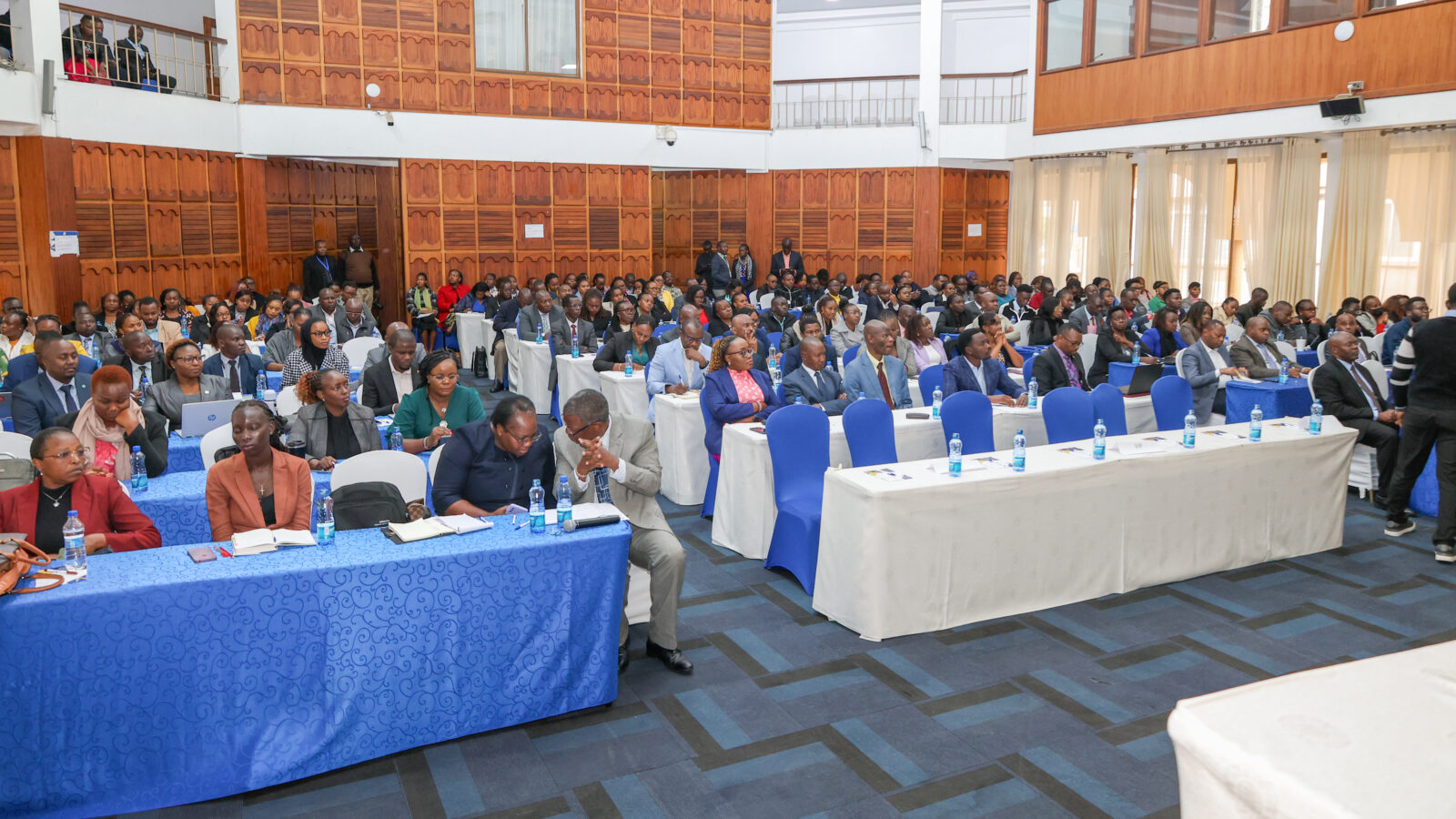
NDU-K Vice-Chancellor Lieutenant General David Tarus warned that information disorder was undermining public trust and posing risks to governance and national security, noting that false and deliberately manipulated information can weaken confidence in institutions, affect policy implementation, undermine social cohesion and influence democratic processes.
He urged government to translate the research into concrete policy and coordinated action, recalling that the study — commissioned alongside a parallel study on femicide following a presidential directive in November 2024 — had been completed, with findings shared with relevant ministries and state departments. NDU-K, he said, was ready to offer evidence, data and technical expertise to support implementation.
University Registrar Dr. Stephen Nzioki Mailu, presenting the findings, said reliable information is central to effective governance, but that fake news and disinformation distort public understanding and weaken confidence in government. He noted that social and digital media had become major channels for spreading misleading information, including during the 2017 and 2022 general elections, and said the study recommends stronger institutional responses, public awareness, digital literacy and improved government communication.
Deputy University Librarian Dr. Dickens Rodrigues Wendo said gaps in government communication create information vacuums that allow speculation and misleading narratives to take root, calling for closer alignment between policy announcements and implementation, and the use of technology and artificial intelligence to detect misinformation, deepfakes and coordinated bot activity.
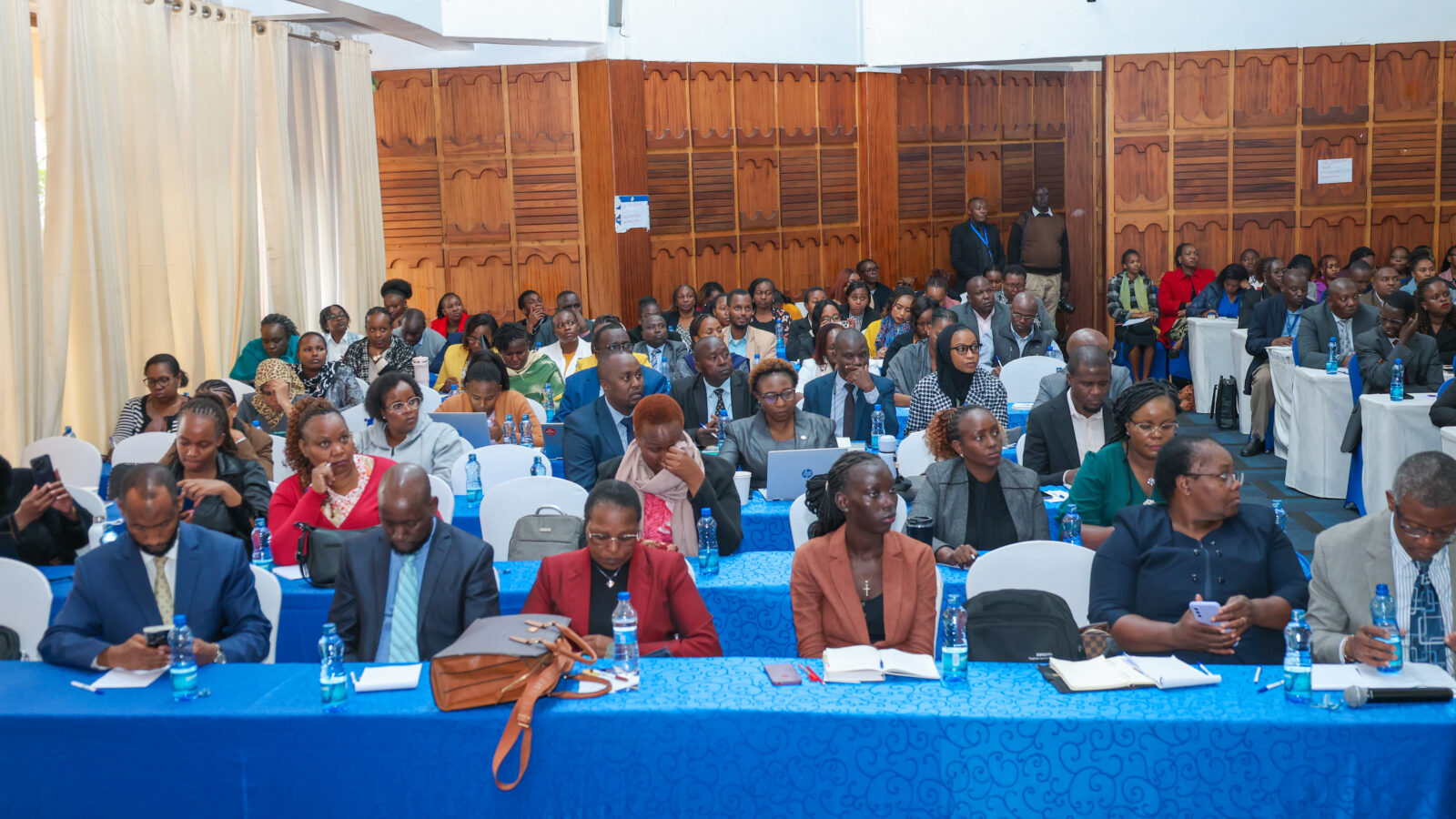
Research Fellow Dr. Raphael Ziro Mwatela outlined a phased six-month roadmap for operationalising the recommendations — beginning with coordination structures and protocols, followed by piloting on sensitive policies and eventual scale-up — while stressing that any response must protect public safety alongside constitutional rights, privacy, media freedom and lawful criticism.
Also present at the forum was Major General Samuel Kipkorir.