Fifteen years ago, faith leaders from around the world gathered in Europe to validate research on reproductive health and family planning. But as the meeting drew to a close, many left with a familiar frustration.
They had debated, drafted communiqués and position papers, then returned home, only to wait for the next invitation from organisations such as the World Health Organization, UNICEF or the World Bank before speaking to one another again.
What they lacked, they concluded, was a permanent platform of their own.
That conversation in 2011 gave birth to the Faith to Action Network (F2AN), an interfaith movement that has since grown from an idea shared by a handful of religious leaders into a southern-led organisation spanning more than 38 countries and seven faith traditions.
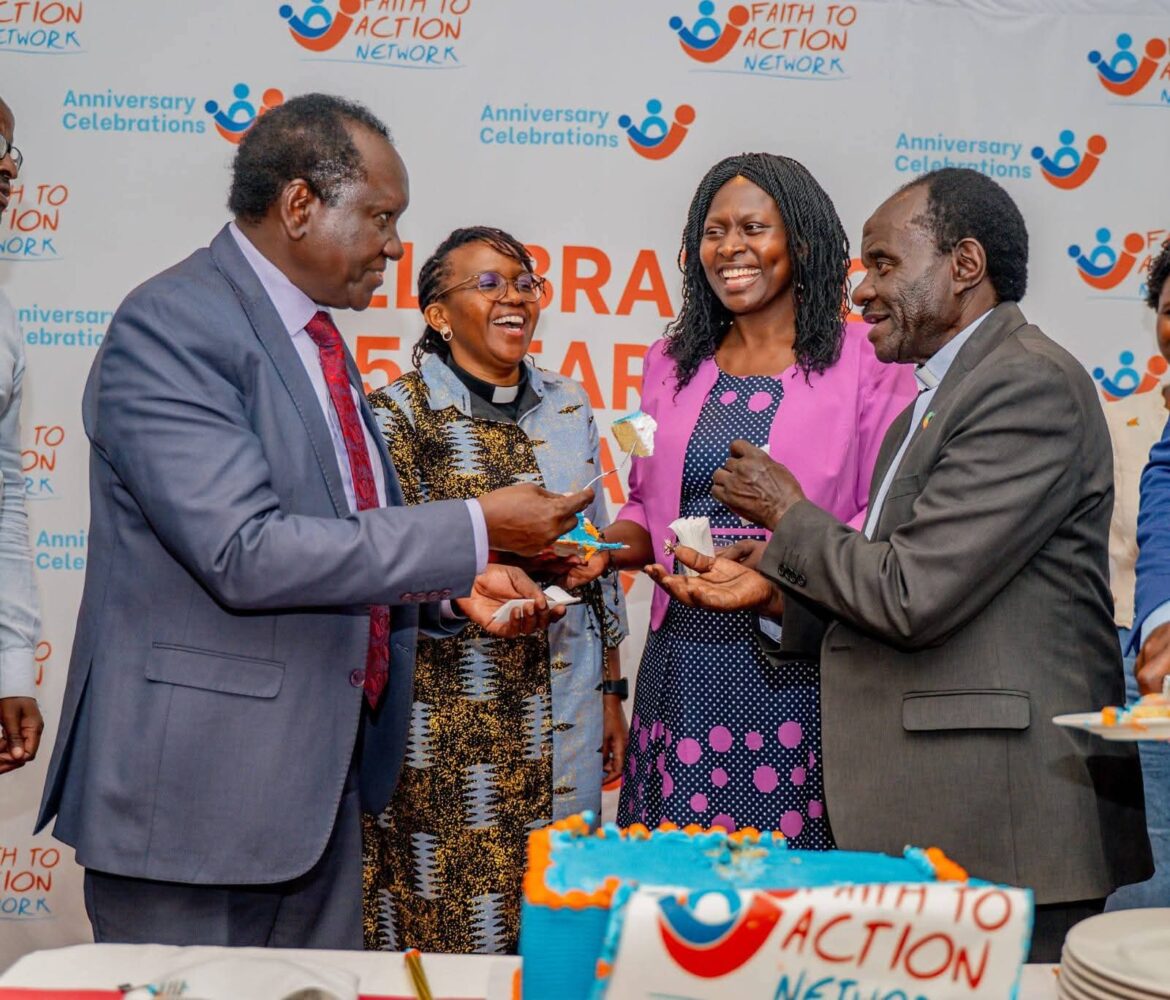
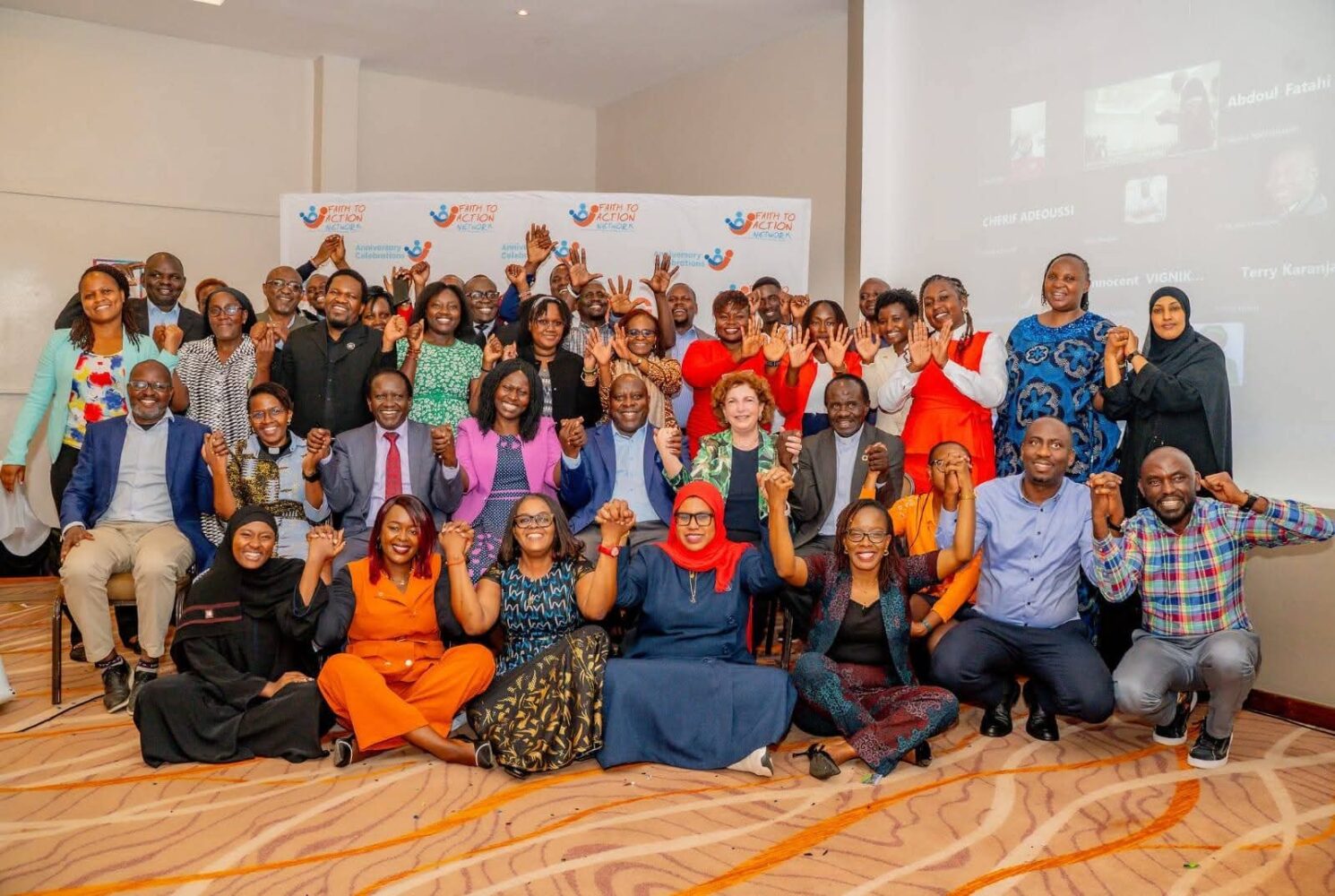
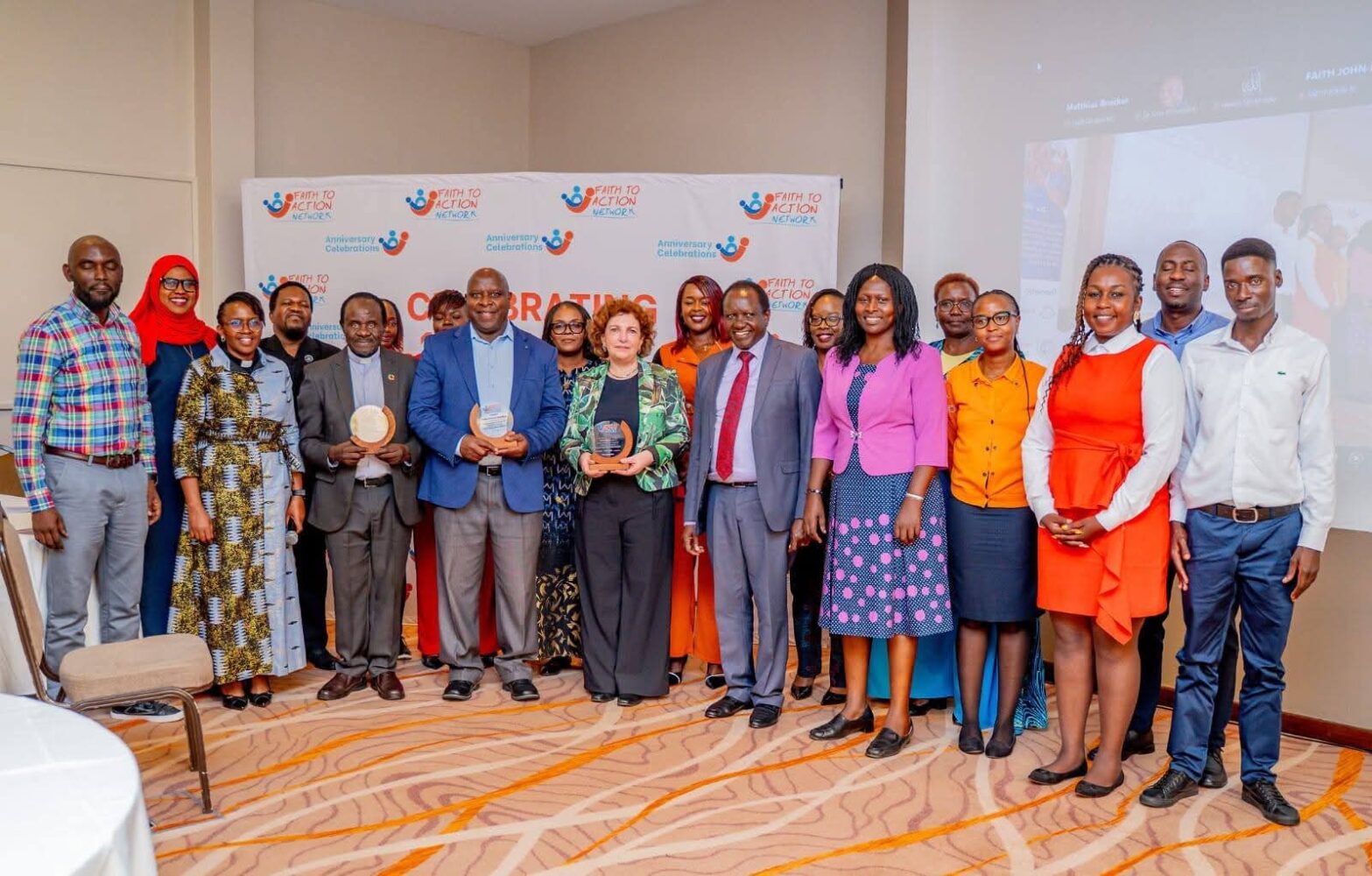
On Thursday, the network marked its 15th anniversary in Nairobi while ushering in a new generation of leadership tasked with steering it through a rapidly changing global development landscape.
“This journey has seen Faith to Action Network grow from just a pronounced network to become an international organisation,” outgoing Chief Executive Officer Peter Munene told guests during the anniversary celebrations.
Today, the organisation brings together more than 140 member organisations and over 215 members and partners working across Africa, Asia, Europe and the Americas to influence policy on family health, gender justice, social accountability and climate-related issues.
Munene traced the network’s origins to a global survey conducted in 2010 by the German Foundation for World Cooperation (DSW), Indonesia’s Muhammadiyah and Christian Connections for International Health (CCIH), with support from the Bill & Melinda Gates Foundation.
The research highlighted the extensive role faith organisations were already playing in reproductive health but also exposed the absence of a permanent interfaith platform through which they could collaborate.
“When the representatives from different faith groups came together… one of their calls to action was to establish a network that is driven and run by the faith community,” Munene recalled.
That same year, Faith to Action Network was formally launched during the International Conference on Family Planning in Dakar, Senegal, before receiving its first seed grant to establish governance structures.
Since then, the organisation has expanded beyond its initial focus on family health and wellbeing to include women’s rights and gender justice, peaceful and inclusive societies, and environmental and climate action.
Yet speakers at the celebration suggested that the anniversary was less about looking back than preparing for what lies ahead.
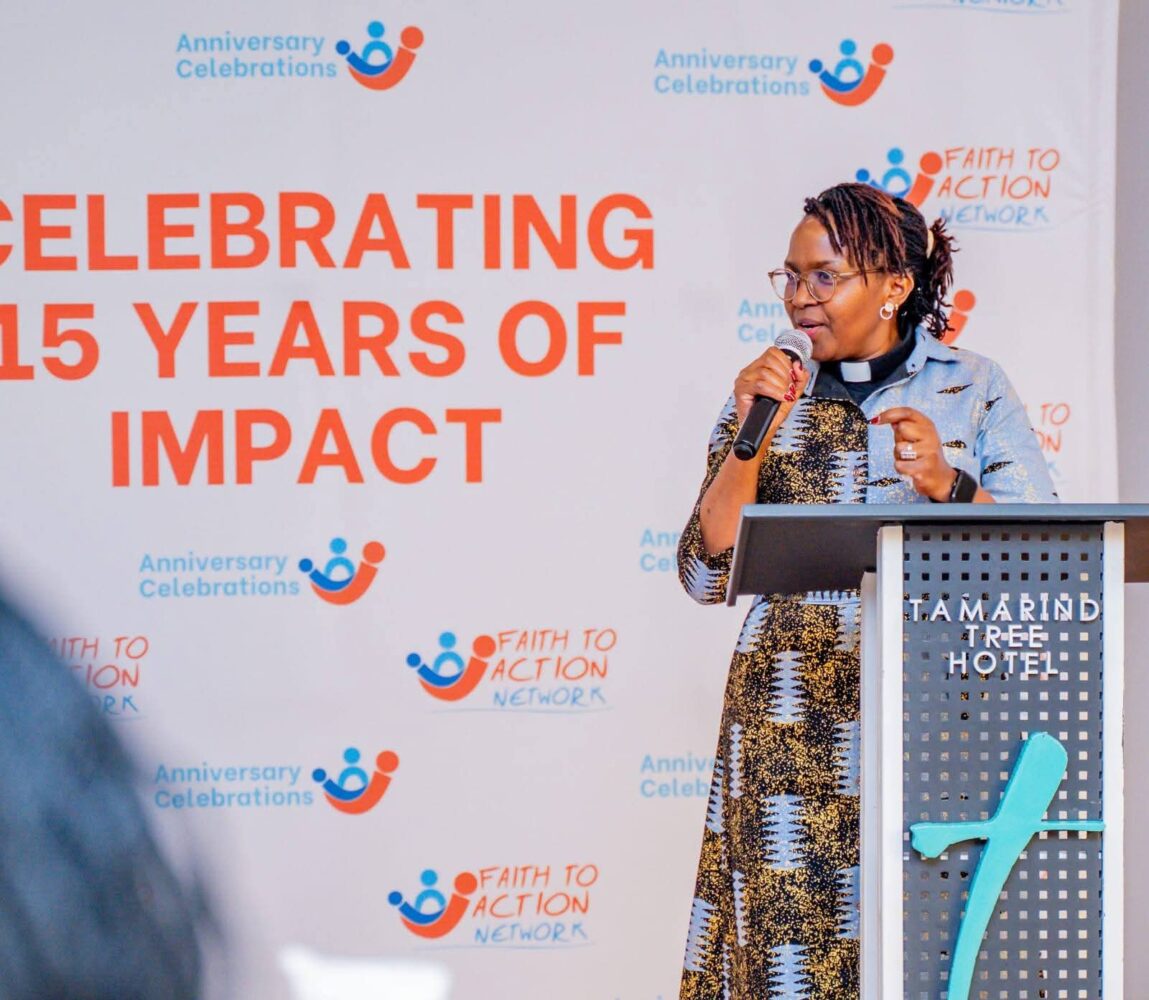
For the incoming Chief Executive Officer Rev. Jane Ng’ang’a, one of the network’s immediate priorities will be ensuring that the lessons accumulated over the last decade and a half are properly documented, measured and shared.
“We look forward to multiplying and documenting the impact that has already been created so that we can showcase what has happened and model what has happened,” she said.
The organisation also plans to establish an online learning platform to enable faith leaders and partner organisations to learn from successful interventions across different countries.
Another priority will be sustainability.
Like many non-governmental organisations, Faith to Action Network is operating in an increasingly constrained donor funding environment. Rather than relying solely on grants, Ng’ang’a said the network intends to diversify its income by expanding consultancy services, commercialising its training programmes and packaging the tools and resources it has developed over the years.
“We have gained the tools, we have developed the resources,” she said. “Those give us a niche to package them into consultancy services or other forms of enterprise that would generate income for the network.”
The organisation also intends to deepen partnerships with governments, multilateral agencies and faith institutions while exploring social enterprise models that reduce dependence on external donors.
Leadership succession also featured prominently throughout the celebrations.
Munene, who has led the organisation since its formative years, described the transition not as a retirement but as evidence that the institution had matured beyond its founders.
“We wanted it to become an institution, not a person,” he said. “We are making it organisational, not personal.”
His successor pledged to build on that foundation by strengthening regional hubs, expanding membership, engaging more young people and addressing emerging issues such as pandemic preparedness.
The incoming Chairperson, Dr. Samuel Mwenda, outlined a vision that also embraces technology and artificial intelligence as tools to strengthen collaboration across the network’s growing membership.
“How can we leverage AI and new innovations to have greater impact with as minimal cost as possible?” he posed.
The celebrations also reflected on one of the network’s greatest challenges, building consensus across different religious traditions on often sensitive issues.
Outgoing Chairperson Rev. Colonel Grace Kaiso said the biggest obstacles had not necessarily been governments or differing national policies but navigating theological differences among faith communities themselves.
“The barriers… are the barriers that we try to address between the faith communities,” she said.
Through what she described as “safe spaces” and sometimes difficult conversations, the network has worked to build common positions on health, gender equality and social development without erasing religious differences.
Asked about contentious debates surrounding reproductive health and abortion, Kaiso maintained that the organisation’s role is not to impose beliefs but to foster respectful dialogue.
“Life is about conversation,” he said. “We express our views with loving care.”
He added that faith communities seek to help people make informed decisions while respecting differing perspectives.
Munene argued that faith leaders remain uniquely positioned to influence social change because of the trust they command within communities.
“The faith leader has this unique opportunity of communicating to congregants about issues on areas of norms that require shifting… in a very safe environment where they are incredibly trusted,” he said.
Over the years, the organisation says it has contributed to policy discussions within the East African Community, African Union and United Nations, while helping secure greater interfaith representation in international decision-making forums.
Among its proudest achievements, Munene cited bringing interfaith voices, not just denominational representatives, to global policy tables.
“Having an interfaith representation means different views, different perspectives are put into consideration,” he said.
As Faith to Action Network enters its next chapter, its leaders say the goal is not simply to preserve the organisation’s legacy but to expand it, by strengthening evidence, embracing innovation, engaging young people and ensuring the network remains financially resilient. For an organisation born out of one conversation between faith leaders who refused to keep meeting only as invited guests, the next fifteen years may prove its most consequential