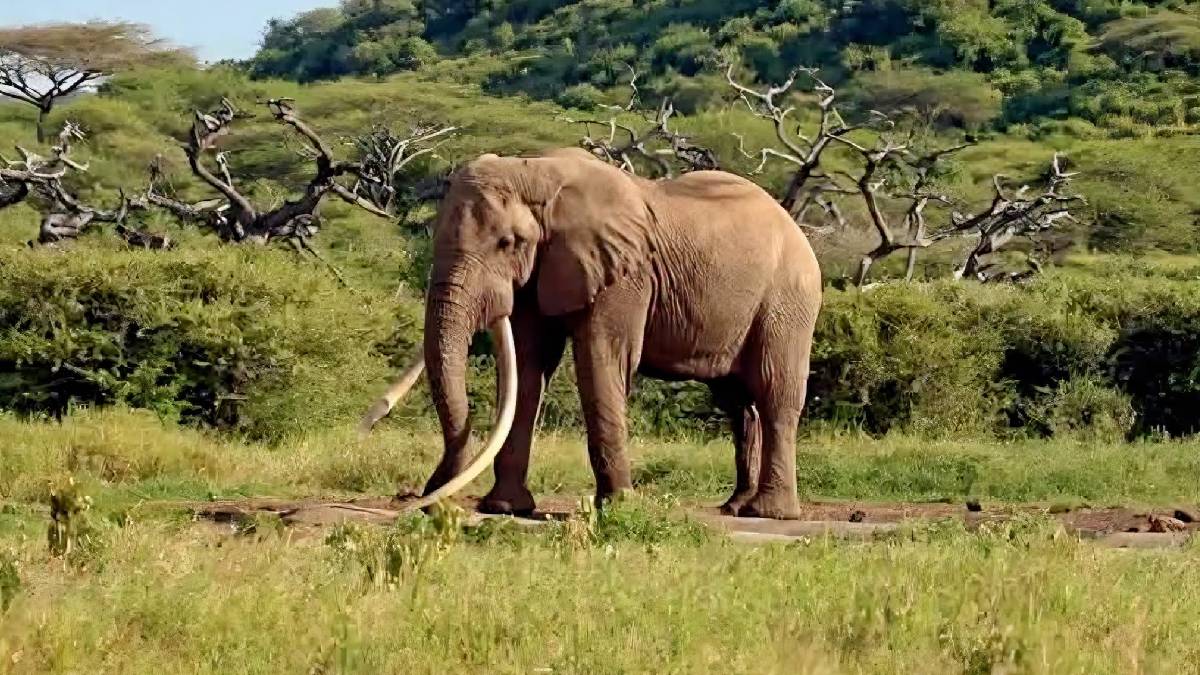
The Amboseli-Tsavo Ecosystem has lost yet another giant, with the death of Tusker ‘One Ton’.
For more than five decades, One Ton, was part of the world renowned ecosystem, embodying the strength and majesty of Africa’s elephants.
In a statement on Monday, July 6 night, the Kenya Wildlife Service (KWS) said One Ton represented a rare generation of elephants that survived decades in the wild, contributing to the ecological richness and continuity of the Amboseli–Tsavo Ecosystem and Kenya’s natural heritage.
The Service estimates that One Ton died after having a long life of between 50 and 60 years.
The iconic bull elephant was famous for its massive body, impressive long tusks, and exceptionally calm demeanour.
“The passing of One Ton Tusk marked the loss of an irreplaceable giant and a significant chapter in Kenya’s conservation history,” KWS stated. “Though the presence of this iconic bull is no longer part of the Amboseli–Tsavo Ecosystem, the legacy of One Ton Tusk endures as a reminder of the importance of conserving elephant populations and protecting the ecosystems that sustain them for generations to come.”
The Amboseli-Tsavo Ecosystem spans from Africa’s highest peak Mount Kilimanjaro to the rugged wilderness of Chyulu Hills and the fauna-rich Tsavo West National Park, all the way back to the Kenya-Tanzania savanna borderlands.
The ecosystem is typically hot and dry with a habitat mix of wooded grassland and shrubland with spots of riverine and natural forest cover. It is referred to as the “Land of Giants” for its large herds of elephants, which include those with impressively huge tusks (“Tuskers”) like One Ton.
The ecosystem has an estimated elephant population of about 1,800 and is also home to large carnivores such as lion, leopard, cheetah, hyena, jackal and civet.