The Africa Forward Summit, which recently concluded in Nairobi, focused on the responsible utilization of the continent’s vast renewable energy resources as catalysts for industrialization, job creation, and equitable climate finance. Kenya, which ranks 145 out of 187 countries in climate vulnerability according to the 2022 ND-GAIN index, exemplifies both the urgency of the challenge and the opportunity for transformative action. Despite its susceptibility to droughts, floods, and rising temperatures, Kenya has positioned itself as a regional leader in climate action, charting a path that combines bold policy innovation, green industrialization, and international collaboration.
East Africa’s largest economy is standing at a pivotal moment. It is no longer just a country on the frontlines of climate change but is actively positioning itself as Africa’s climate solutions hub. This has been buttressed by the country’s leadership’s proactive measures, such as hosting the inaugural Africa Climate Summit in 2023, which culminated in the Nairobi Declaration—a landmark commitment to advancing green growth across the continent.
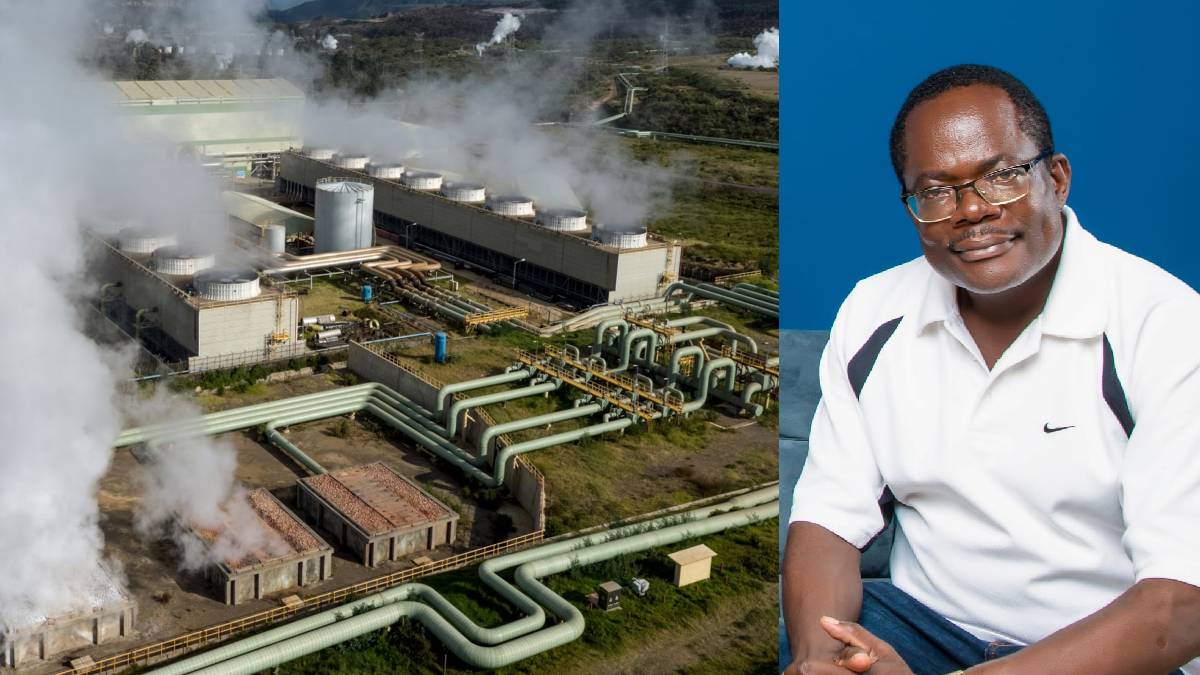
Kenya has made significant strides toward implementing this vision, with 90 percent of its energy produced from renewable sources and policies rated as compatible with the Paris Agreement’s goal of limiting global warming to 1.5 degrees Celsius. At the centre of that vision sits the Sleeping Warrior Special Economic Zone (SEZ) in Elementaita, a 1,517-acre green industrial park combining geothermal energy, carbon capture, clean manufacturing, agro-processing and climate technology ventures.
From a Receiver of Climate Investment to a Global Creator of Green Technology
Kenya is also rapidly shifting from a receiver of climate investment to a global creator of green technology. The Rift Valley is also home to Octavia Carbon, which operates the Global South’s first Direct Air Capture (DAC) plant, proving the nation’s capacity to design and scale global-first climate tech.
The SEZ is also positioned to become a hub for high-integrity carbon credits—a market poised to generate annual turnovers of $100 billion globally between 2030 and 2035. Kenya’s geothermal-powered DAC plant can generate premium credits, offering a new revenue stream for local communities and investors alike.
Additional planned investments feature a $34 million, 7.5-megawatt solar plant and a green ammonia facility designed to output 300,000 tonnes of sustainable maritime fuel each year. Furthermore, talks are underway with semiconductor, lithium battery, and solar panel manufacturers. To date, the Special Economic Zone (SEZ) and its related geothermal projects have generated over 175 jobs.
Leveraging Partnerships Through the Green Corridor
Yet even the most visionary industrial parks cannot succeed in isolation. For all its geothermal steam and engineering talent, Kenya lacks the sheer scale of patient capital required to turn these proposals into operational realities. This is precisely where strategic international partnerships become indispensable. The missing ingredient is long-term climate capital—and this is where the United Arab Emirates is becoming one of Africa’s most consequential partners.
Drawing on its domestic capabilities and international experience in renewable energy development, project delivery, and innovative financing, the UAE views investment in Africa’s clean-energy sector as a core pillar of its external engagement and long-term development partnership with the continent. Through this approach, the UAE aims to support sustainable infrastructure, crowd in private and multilateral capital, and enable African countries to unlock the economic and social benefits of clean, reliable, and affordable energy.
“In renewable energy, Masdar has tripled its African renewables capacity to 3GW and is actively engaged with Kenya Power. These investments are designed to build productive capacity, support technology transfer and create skilled employment, with a focus on long-term industrial growth and economic resilience”, notes Dr. Thani bin Ahmed Al Zeyoudi, UAE Minister of Foreign Trade.
AMEA Power, the Dubai developer owned by Al Nowais Investments, has invested $800 million in the 200MW Paka Geothermal Project in Baringo County. Beyond generation, BEEAH Group is exploring waste-to-energy partnerships with Kenyan counties; Etihad Credit Insurance is extending clean-energy financing, building on $500 million committed under a $4.5 billion UAE Africa Green Initiative. The UAE was already Kenya’s sixth-largest source of FDI in 2024. The Gulf brings patient capital and execution muscle; Kenya brings world-class geothermal and a renewables-heavy grid.
Africa’s green transition will ultimately be measured not by the number of climate pledges announced at global summits, but by the quality of partnerships that translate ambition into action. Kenya brings world-class renewable resources, progressive climate policies, and a clear development vision. The UAE brings capital, technology, and a growing commitment to financing Africa’s clean energy future.
The author is a Global Communications Strategist and a commentator on climate change