Kenya has thrown its full weight behind a renewed global push to counter the world drug problem, using the Thirty-third Meeting of Heads of National Law Enforcement Agencies (HONLEA) in Vienna to champion stronger international cooperation and the protection of vulnerable communities.
Speaking at the meeting on behalf of the Africa Group, H.E. Mr. Edwin Afande, MBS, Ambassador and Permanent Representative of Kenya to the United Nations in Vienna and Chair of the Africa Group, reaffirmed that the fight against narcotics is a common and shared responsibility of all UN member states.
He expressed grave concern over the persistent disparities in access to controlled substances for medical purposes and the growing threat of synthetic drugs. Ambassador Afande noted the interlinkages between drug trafficking, corruption, illicit financial flows, and terrorism, stressing the need for enhanced regional and international cooperation.
The Ambassador further called upon the UNODC to support member states in strengthening measures to prevent, detect, and respond to the proliferation of substandard and falsified medical products, which pose a serious threat to public health and socio-economic development in Africa. He also urged the international community to remove all barriers and ensure equitable access to controlled substances for medical and scientific purposes, particularly for pain relief and palliative care.
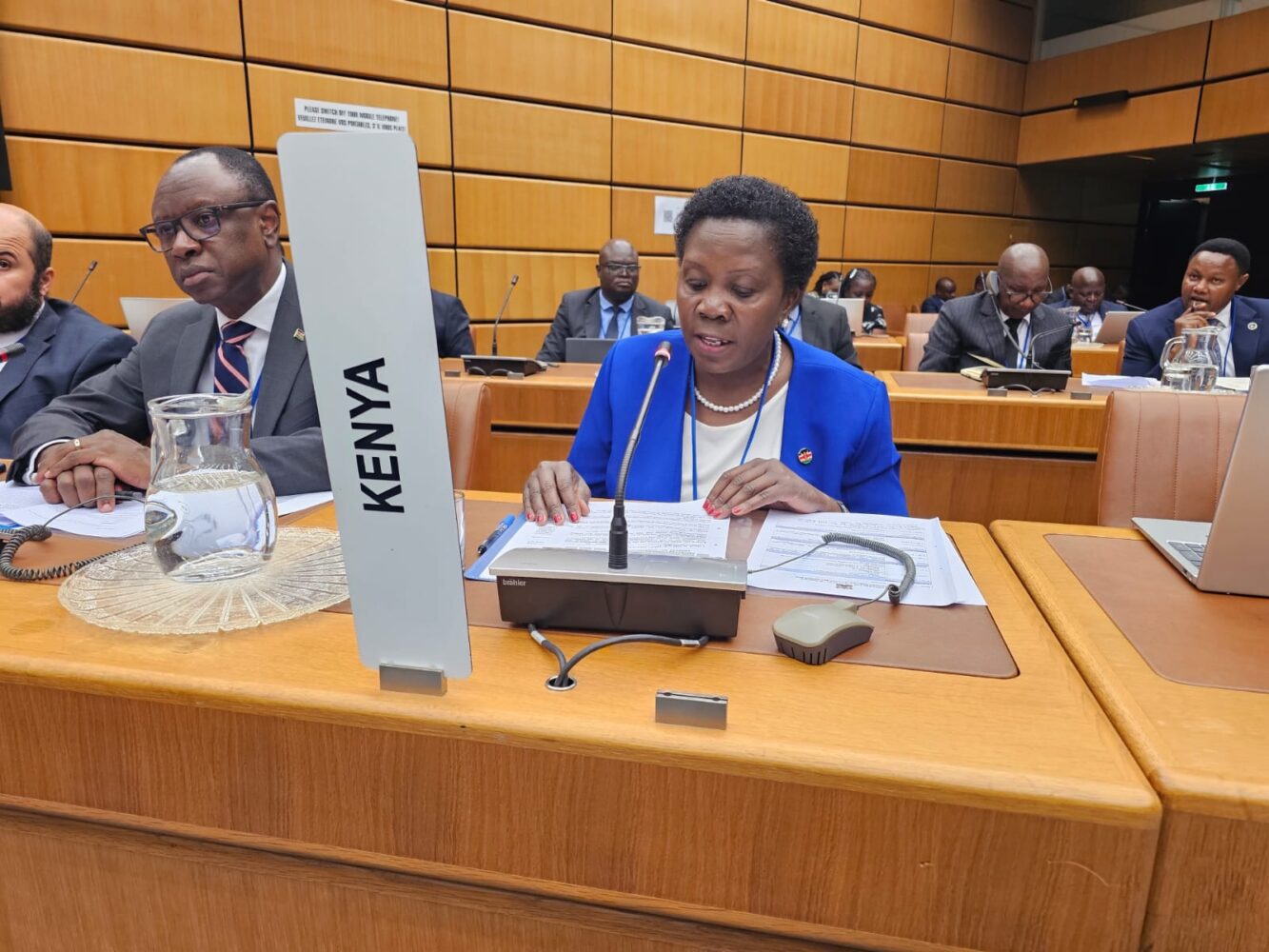
Kenya’s national statement, delivered by Ms. Beverly Opwora, Principal Administrative Secretary in the Ministry of Interior and National Administration and Head of the Kenya Delegation, outlined the country’s robust legal and policy framework in line with the 2019 Ministerial Declaration. Ms. Opwora highlighted Kenya’s National Policy for the Prevention, Management & Control of Alcohol, Drugs & Substance Abuse, which prioritises security, public health, and a comprehensive care approach.
However, both leaders acknowledged significant obstacles. Ambassador Afande pointed to the “scourge of synthetic drugs” as a game changer that has challenged traditional interventions, while Ms. Opwora cited the expanding range of drugs, the misuse of precursor chemicals, and the shift from plant-based narcotics to synthetic substances that can be manufactured anywhere and by anyone. She also noted that the combination of different substances is now a “fashionable” trend that has complicated enforcement efforts.
Ms. Opwora emphasized the need for a paradigm shift in countering the world drug problem, urging the international community to build capacity and expertise at all levels. She called for stronger monitoring and communication platforms, modern forensics to identify synthetic drugs, and enhanced data collection mechanisms. She also stressed the importance of health responses to adequately meet the needs of affected individuals and handle adverse health consequences, including overdose.
Both leaders reaffirmed Kenya’s commitment to the principle of common and shared responsibility, calling for a balanced approach that upholds the rule of law while addressing drug abuse as a health and social issue. Ambassador Afande reiterated that African countries need adequate and sustainable support from developed countries, including finance, technology transfer, and capacity building tailored to their national needs.
In closing, Ms. Opwora expressed hope that when the international community reviews its commitments in 2029, significant results will have been attained, ensuring that no one affected by the world drug problem is left behind.