
By Dr Laxmana Kiptoo
Northern Kenya, historically disadvantaged in many aspects, is a land of striking contrasts. Like many dryland regions across the world, communities in these counties are navigating growing pressures of climate change. Drawing from deep wells of ingenuity and adaptation passed down through centuries of living on the land, the North bravely confronts food insecurity, water shortage, and challenges in healthcare and diverse livelihoods. A calm heroism inspired by innovation and resilience is beneath this background—a strong will to succeed as a region and collectively as the Kenyan nation.
The role of PBOs
An army of dedicated charities popularly known as the Public Benefit Organisations (PBOs) works in the remotest villages to complement government development efforts. Theirs are not just compliance reports. They are real schools built in sandy fields, water provided to ASAL areas, mothers who survived childbirth, children who went to bed fed, and communities that chose dialogue over conflicts. Nationally, the PBO sector received KSh246.7 billion to support project implementation. This year’s Madaraka Day theme dubbed “Education, Skills and Future” aptly resonates well with the North’s schooling and training ecosystem.
In Wajir County alone, 341 national and international PBOs partnered with government and United Nations agencies in the 2024/2025 Financial Year monitoring cycle. They implemented various programmes in education, peacebuilding, climate resilience, food security, rangeland management, water and sanitation, health and nutrition, and refugee services.
President’s promise kept
Kenya’s 63rd Madaraka Day carries special resonance to the charitable sector. The PBO Act of 2013—one of the world’s most progressive legislations on regulating Civil Society Organisations—remained on the shelves for more than a decade. A promise deferred, it would gain a lease of life when President William Samoei Ruto directed its operationalisation effective 14 May 2024.
Established under the PBO Act, the Public Benefit Organisations Regulatory Authority (PBORA) worked under the guidance of the Cabinet Secretary of Interior and National Administration and the civil society to develop the PBO Regulations of 2026. The Regulations are a comprehensive framework designed to operationalise the Act fully.
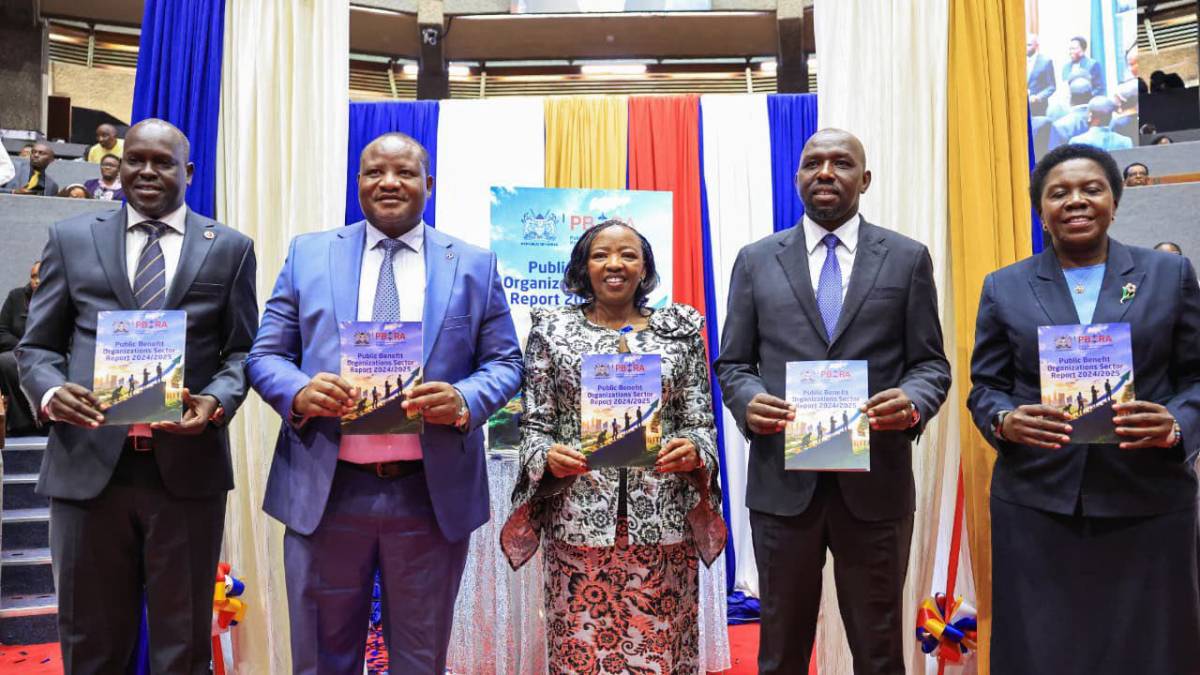
Parliament approved the Regulations on 9 April 2026. In a moment that captured the nation’s attention during the launch of PBO Week on 13 April 2026 at the Kenyatta International Convention Centre (KICC), the First Lady of the Republic of Kenya H. E. Rachel Ruto unveiled them. The significance of that moment was because Kenya’s charitable sector finally had a facilitative regulatory framework after years of legislative limbo. The PBO Regulations of 2026 make the sector more accountable, transparent, and financially sustainable while ensuring that PBOs remain genuinely responsive to the communities they serve.
The robust Act champions partnership and self-regulation as well firmly anchoring the right to associate and organise within the guarantees of Article 36 of the Constitution of Kenya. Madaraka, after all, means self-governance. And in giving PBOs the tools to govern themselves with integrity and associate, Kenya is extending that freedom to the very organisations that support her in carrying social contract to the furthest corners of the republic. The true measure of any law is not its language, but in its impact on human lives.
Policy meets purpose in Wajir
The PBO ecosystem is both wide and deep in Wajir. Local organisations form the bedrock of community transformation. Arid Lands Development Focus (ALDEF), the Wajir South Development Association (WASDA), the Rural Agency for Community Development and Assistance (RACIDA), and Wajir Champions for Change (WC4C) are among the frontline groups driving the wheels of education and training, grassroots climate resilience, youth empowerment, food security, and Water, Sanitation and Hygiene (WASH) initiatives among others.
The Wajir Peace and Development Agency (WPDA) brings a different but equally vital community gift: it mediates cross-border tensions and nurtures local peacebuilding processes in a region where resource competition can quickly ignite conflict. Meanwhile, the Ardha Jabesa Foundation champions a cause often invisible to outsiders: land rights.
International organisations amplify these efforts. The Danish Refugee Council (DRC), Islamic Relief Kenya (IRK), International Rescue Committee (IRC), Save the Children, Amref Health Africa, World Vision, and Catholic Relief Services (CRS), among others, strengthen health infrastructure, combat malnutrition, support community dialogues, and spatial planning for growing settlements.
A shared conviction that the people of the North are not a problem to be managed but a potential to be unlocked for the success of Kenya binds all the PBOs in the region.
Safeguarding the sector, protecting people
None of this work can succeed without a trust that requires accountability—PBORA’s mandate becomes critical here. The Authority not only enables legitimate organisations to thrive but also safeguards the sector from misuse that includes protecting them from the risk of terrorist financing.
The PBO Regulations of 2026 strike a deliberate balance: they create a facilitative environment that encourages PBOs to grow, innovate, and serve while establishing clear standards of governance, financial transparency, and public accountability that protect communities, donors, and the integrity of the sector itself.
A future written in the ASALs
The story of Northern Kenya offers a powerful lesson as Kenya reflects on its 63 years of self-determination: freedom is not won on podiums only. It is earned, every day in a dusty health clinic in Wajir County, a WASH project in Mandera County, and even a peace dialogue held under a lone acacia tree in Garissa County.
The PBOs of Kenya’s arid north are heroes in the truest sense of the word. With the PBO Act now fully alive, the chapters they are writing for the forgotten frontiers of this country are only getting bolder and broader.
Dr Kiptoo is the Director-General of the Public Benefit Organisations Regulatory Authority.