The Macondo Literary Festival, an international event connecting Africa’s histories and futures through literature held in Nairobi each September, has unveiled the theme and programme for its sixth edition, “Ink, Sea, Silence,” ahead of the three-day festival taking place from 18–20 September 2026.
The theme sets the tone for a programme of literature, art, music and conversations exploring Africa’s histories and futures.
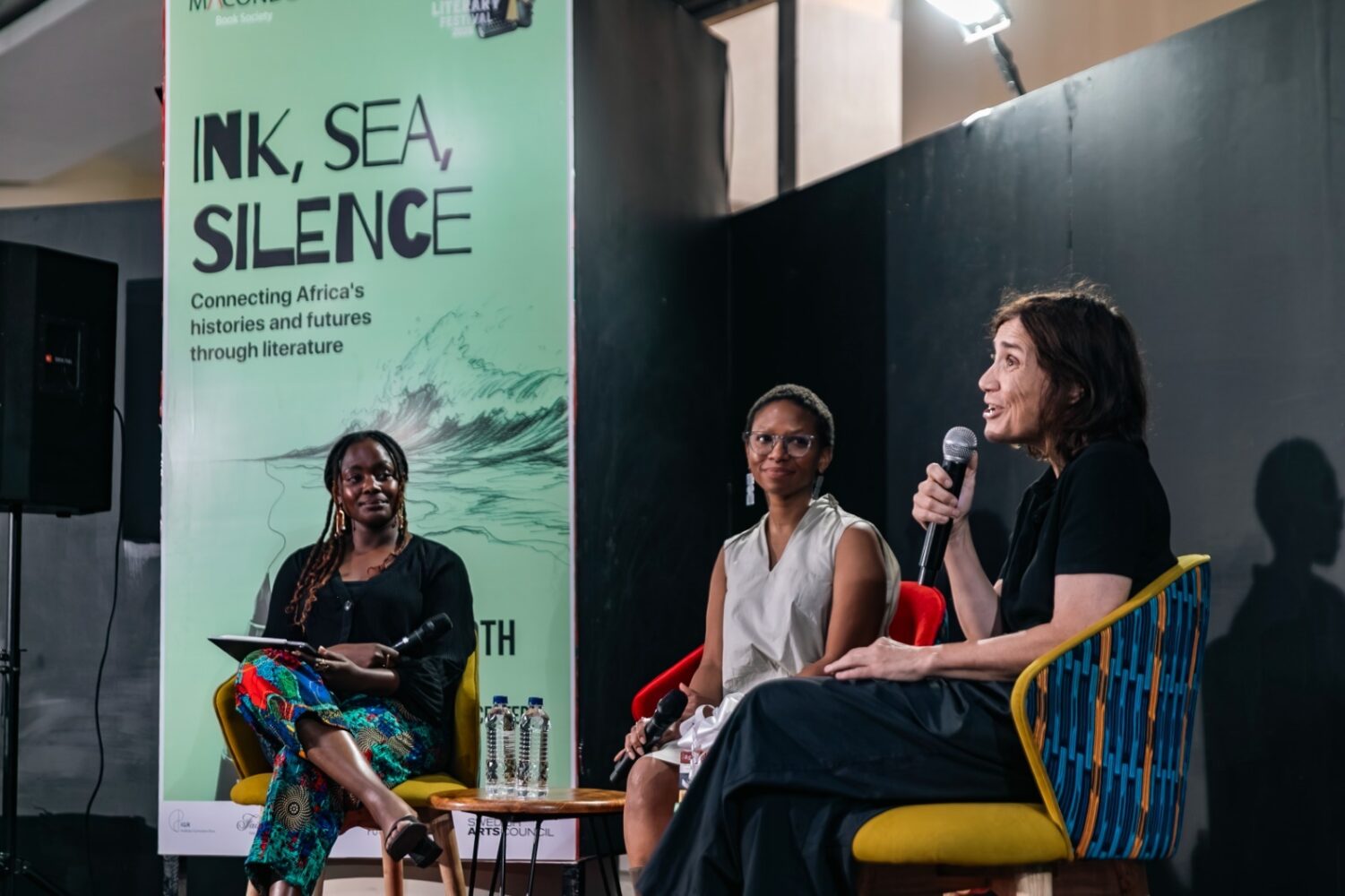
The theme and programme were launched on 4 September at Maktaba Kuu (Kenya National Library Service), where discussions on the restitution of African heritage took centre stage.
The event brought conversations on the looting of African artefacts, the silencing of the continent’s heritage, practices and culture and the impact of these silences on the archives to the fore, offering an early reflection of the questions that will shape this year’s festival.
The panel discussion, hosted by Mutanu Kyany’a of African Digital Heritage, explored why an estimated 90–95% of African artefacts remain in Western museums and private collections, despite these items being an integral part of our history and heritage.
The panel brought together poet, writer and filmmaker Ngwatilo Mawiyoo alongside French art historian Bénédicte Savoy, a leading authority on the provenance and restitution of looted cultural heritage.
Together with audience members present, Mutanu and the panelists explored what these “Archives of silence” mean to us today, why this history is important, and what freedom means for us today, in the often uncomfortable and historical context.
During the conversation, Savoy—co-author of the landmark 2018 Sarr-Savoy Report on restitution, commissioned by French President Emmanuel Macron—explained how African artifacts and manuscripts were systematically looted and hidden in plain sight, directly undermining the continent’s heritage and intellectual traditions.
“The French, for instance, were very keen on books in Africa when they looted many historical and significant items,” Savoy noted.
“So, you have a huge collection of African books looted by the French in the 19th century in the middle of Paris at the Bibliothèque Nationale, and they are not in a department or a section for African manuscripts because they are written in Arabic. It is African language but in Arabic letters. So in France, if you would go to the Bibliothèque Nationale, they would say, ‘No, we have no manuscript Africain. We have manuscript Arabe.’”
She further emphasised that categorising these works in this way is a mechanism used to silence African intellectual contributions, insisting that the necessary resolution is for France and other western nations to return these manuscripts and artifacts to their countries of origin, such as Mali, Senegal and Guinea.
Savoy, whose 2022 publication Africa’s Struggle for Its Art: History of a Postcolonial Defeat explores how African nations fought to reclaim colonial-era looted art beginning in the 1960s and documents Western institutional resistance, noted that while conversations around the restitution of African art have received wider attention and acceptance in recent years, the push, which began during colonial times, still faces significant challenges today.
In response, Kenyan poet and filmmaker Mawiyoo posited that reclaiming Africa’s artefacts requires intentional action and a resolute “fighting spirit”.
“If you take the people of Namibia, for instance, with the massacre of the Herero, it’s because they came together almost as an activist group, as a nation, that they were able to fight and get their artifacts back, and also get restitution for the massacre,” Mawiyoo stated.
“But when I look at us over a long time, I find in East Africa we’re very accepting of circumstances. We just sit here, we internalize, and we stop there. We don’t have that fighting spirit. Maybe it’s because it’s been so long since independence, but if you look at the younger nations, you find they still have that activism in them—South Africa, Namibia, you know?”
Mawiyoo’s call for Africans to take ownership of the restitution narrative addresses a major systemic imbalance. While global interest in restitution has surged, control over the discourse remains skewed.
According to a 2022 report titled Reclaiming Restitution by Open Restitution Africa and Africa No Filter: “The growth of the narratives on concerns of African heritage restitution is positive, but this does not equate to equal growth of participation of Africans in the narrative. According to Google Search data, in 2020, non-Africans were 17 times more likely than Africans to be referenced or interviewed, or to author articles on African heritage restitution.”
Anja Bengelstorff, who co-founded the Macondo Book Society alongside award-winning Kenyan novelist Yvonne Adhiambo Owuor, explained that this year’s theme calls readers and African audiences to interrogate not only what has been silenced or left out, but also the ink with which the histories of the continent have been written about, and who continues to control the narrative.
“Africa’s story has been inscribed by many hands, not always in goodwill,” said Bengelstorff. “It has been subject to the constrained and often violent imagination of others: re-inked, overwritten, twisted into shapes that served predatory visions, not truth. Part of our festival discussions this year will examine how the writers of the many Africans are reclaiming the ink of their own becoming, and what scripts they are inscribing upon the present and future. In a time when narratives are contested and rewritten with speed, what new currents might African writing chart across the seas of shared histories?”