
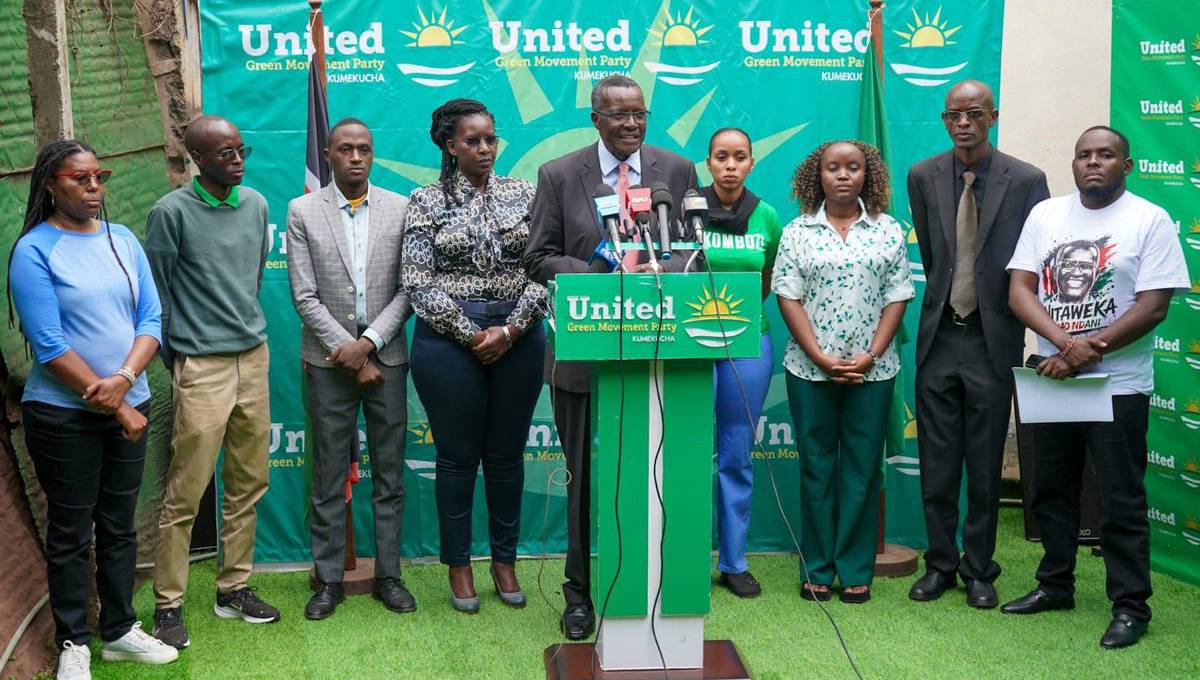
The United Green Movement Party, led by former Chief Justice David Maraga, has called for urgent government action following the deaths of 15 elephants in the Amboseli National Park ecosystem.
This is after preliminary laboratory findings by the Kenya Wildlife Service detected traces of cyanide in samples taken from the dead animals.
Investigations are pointing to the ingestion of cyanide-contaminated tomatoes from nearby farms, with cyanide also linked to unregulated artisanal mining across Kenya.
The party described the tragedy as far more than an isolated wildlife incident, calling it a direct warning about the collapse of environmental compliance and enforcement under the Ruto administration.
“Hazardous chemicals have continuously surfaced in the food and water systems that sustain both wildlife and human communities across various parts of Kenya,” the statement noted.
UGM took particular aim at the government’s refusal to ban 202 hazardous pesticides that are already banned in European and American markets, including Glyphosate, which has been linked to cancer.
The party said these chemicals are brought in by multinational agrochemical companies and are a key reason Kenya’s agricultural exports are frequently rejected by international markets.
The party laid out nine specific demands, calling for thorough environmental investigations to determine whether a common contamination source is responsible, and urging the National Environment Management Authority, the Pest Control Products Board, and county governments to act swiftly and transparently in establishing the exact source and scale of the contamination.
Other demands include immediate enforcement of existing pesticide-control regulations, a full independent audit of pesticide and toxic chemical supply chains, a total ban on the 202 hazardous pesticides currently classified as merely restricted, immediate testing of nearby produce, water sources, and livestock, compensation for victims of toxic pesticides, and regular public reporting by NEMA, the PCPB, and KWS on environmental contamination incidents.
“Kenya’s wildlife is not collateral damage, and our people are not expendable. This must be the moment enforcement becomes real, transparent, and equal for all,” the statement concluded.