
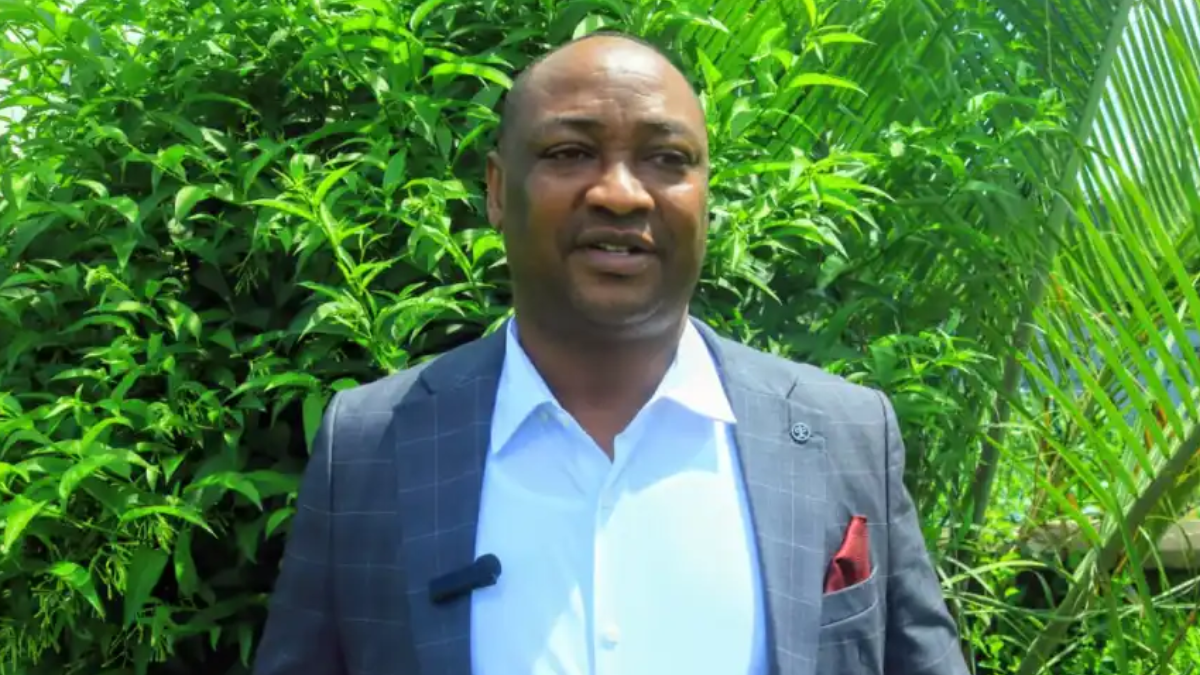
National Liberal Party Leader Dr. Augustus Muli has vowed to call out any leader, regardless of tribe, who “plays games with Ukambani’s future,” saying the region has suffered for too long from political hypocrisy and recycled leadership.
Speaking after his remarks on former Deputy President Rigathi Gachagua sparked debate, Dr. Muli insisted his criticism was not a tribal attack but a defense of the region.
“When I criticized DCP Leader Rigathi Gachagua this week, some rushed to frame it as a tribal attack. It was not. It was a defense of Ukambani,” Muli said.
The NLP leader accused Gachagua of double standards, noting that the DCP boss had previously blamed certain Ukambani leaders for keeping the region “perpetually underdeveloped” but was now endorsing the same leaders.
“You cannot diagnose the disease on Monday and dine with it on Tuesday. That is not strategy. That is political gambling — and Ukambani is not a casino,” he said.
Dr. Muli maintained he would not spare any leader who betrays the region’s interests. “I’ll call out any leader, Kamba or otherwise, who plays games with Ukambani’s future,” he said. “This is not about tribe. It is about truth. If a Kamba leader betrays our people, I will name him. If a Kikuyu, Kalenjin, Luo or Luhya leader uses our region as a pawn, I will name him too.”
He said Ukambani had paid “too high a price for polite silence” over the last 60 years, citing a cycle of unfulfilled promises on cotton, dams, and factories that leave the region with “no water, no jobs, no voice” after every election.
According to Muli, the United Opposition’s current approach exposed a lack of sincerity. “Endorsing yesterday’s failures as today’s champions is not coalition-building. It is betrayal dressed as unity,” he said.
Ahead of the 2027 elections, the NLP leader called for a “radical break” from recycled leadership, saying Ukambani’s politics must shift from individuals to industries.
He outlined a three-point NLP agenda for the region: reviving Kitui Textiles and building agro-processing plants so that “value addition stays here”; fast-tracking Thwake Dam to irrigate over 100,000 acres because “a region with two permanent rivers should not beg for relief food”; and linking TVETs directly to industries so that “a diploma comes with a job offer, not depression.”
“Ukambani’s tragedy isn’t lack of resources. It’s lack of respect — from Nairobi and from some of our own leaders,” Muli said.
He challenged Gachagua and the United Opposition to present a development plan for the region. “If you’re serious about Ukambani, show us factories, not funerals. Until then, we won’t be your voting machine,” he said.
Addressing fellow Kamba leaders, Muli said the era of being “kingmakers for others” must end. “Either we make Ukambani king, or history records us as the generation that leased our children’s future,” he said.
Responding to claims that his remarks were driven by bitterness, he said: “If demanding water for my mother and jobs for my sister is bitterness, then Kenya needs more bitter people.”
Dr. Muli said he entered politics to be “useful to the powerless,” adding that this meant “choosing people over party, region over tribe, and future over past.”
“The time for games is over. The time for growth is now,” he concluded.