
East Africa’s high unemployment level is pushing young people to the extreme where well organised individuals through fraudulent job advertisements and a promise for a better life are luring them to work in Myanmar, a South East Asian country that has been under military rule since 2021.
On reaching Myanmar through various criminal syndicates, the workers are forced into armed, high-tech scam compounds run by rebels deep in the forests. The victims are trapped in debt and have to endure extreme physical violence as their masters’ push for results.
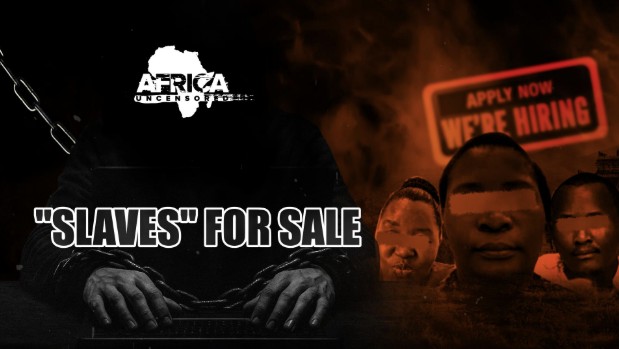
For more than eight months, Africa Uncensored dug into the hidden reality of what happens when people are trafficked, exposing a pipeline that lures vulnerable individuals halfway across the world with promises of legitimate work. But what awaits them is far from what was promised.
Their stories reveal not just the reality of trafficking, but the human cost of systems and governments that fail to protect their own people.
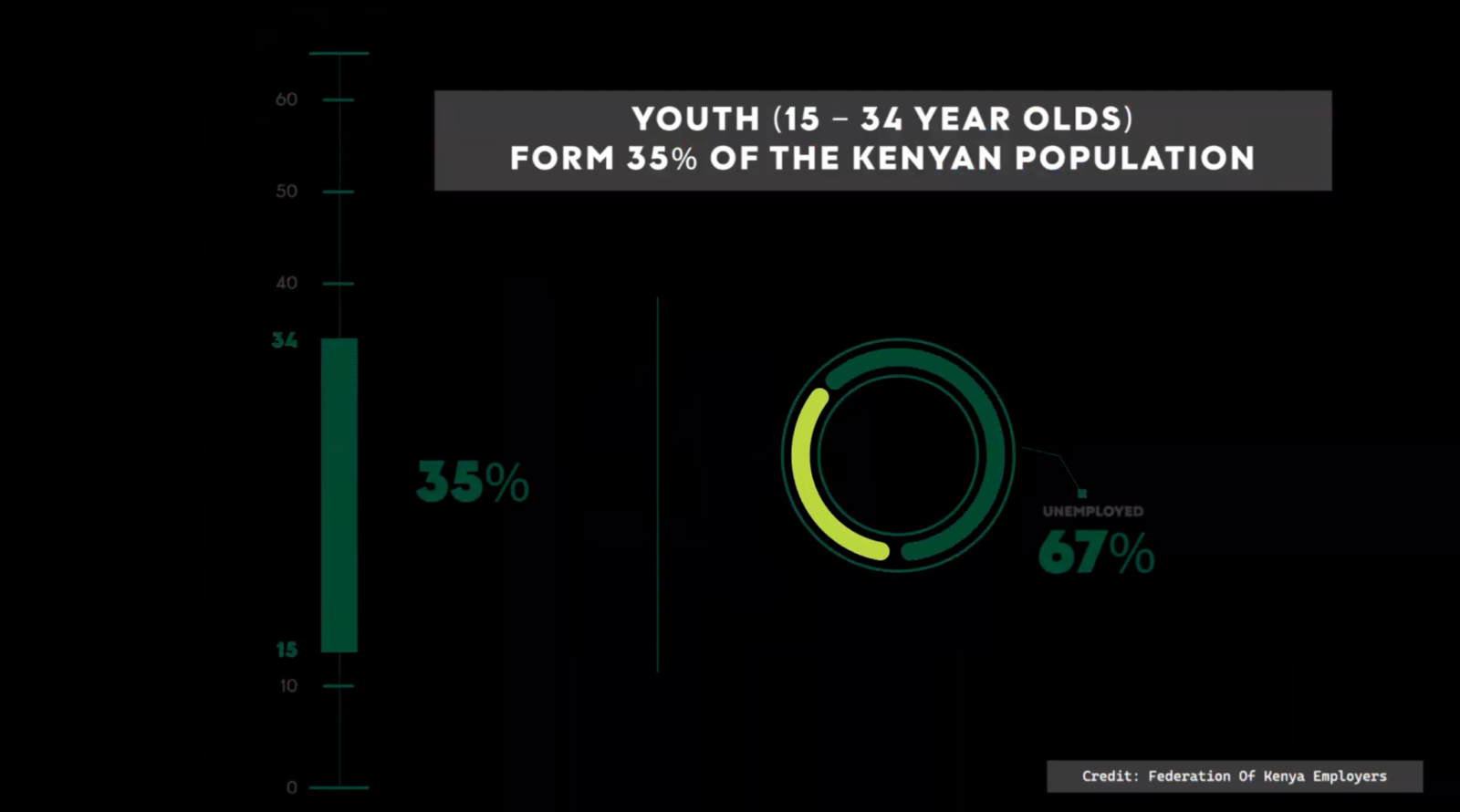
In the bustling streets of Nairobi, thousands of young people chase the promise of a job and a better life. The Federation of Kenya Employers, a national umbrella body and the voice of employers in Kenya, says that each year, over one million young people enter the country’s job market, but jobs are few and far between. Youth unemployment among those aged 15 to 34 hovers at 67 percent. Two out of three young people are unemployed. The unemployment situation in neighbouring Uganda is similar as young people are left with no option but to scout for jobs abroad.
This is how Malcom (not real name), a Ugandan and Kwamboka (not real name) a Kenyan ended up into slavery in the jungles of Myanmar, working for a multi-billion-dollar human trafficking and cyber fraud industry. They each give their accounts independently on how they ended up in the Myanmar jungles far from their homeland.
31-year-old Kwamboka, a single mother of two, once dreamed of a better future for her daughters. She wanted to give them a chance at the life she never had. So, when an opportunity to work overseas surfaced, it felt like the breakthrough she had been waiting for.
A family friend told her there was a job opportunity in Thailand and that she needed to be tipped for scouting for that job. Days later, the family friend took Kwamboka to an office along Ngara Street, Nairobi to meet a travel agent concerned.
“I was introduced to a gentleman who mentioned he has jobs as a cleaner, secretary, and customer service. I responded that I would prefer to go with customer service, because it is less demanding,” Kwamboka said.
She identifies the travel agent as John Njuguna. It is this Njuguna who handled her travel documents after she paid a processing fee.
Within three weeks, everything was set for her to leave. Before she departed, she was introduced to Grace Eshiwani, the person who would become her main link to the supposed employers overseas.
“Eshiwani instructed me to go to a cyber cafe where I did a live interview for typing” Kwomboka revealed, noting that it was Njuguna who introduced her to Eshiwani, who then guided her all the way to Bangkok.
Before catching the flight to Thailand, Eshiwani coached Kwamboka on what to say if the immigration officers at the Jomo Kenyatta International Airport in Nairobi questioned her.
“Don’t tell him you’re going to work. Tell him you are going on vacation. In that ticket, there is a day to go and come back. Everything is in there,” Eshiwani’s message to Kwamboka read.
“When we arrived in Bangkok, we met people who had our photos. Not one, not two. We were directed to the vehicle that was to ferry us, a BMW!” Kwamboka said. She now looked at a better life, a fresh start that would make her children back home live a better life.
This excitement was short-lived as it spiralled into an 18-hour ordeal. Meanwhile Eshiwani was still in contact with Kwamboka through Telegram. He kept reassuring her that all was proceeding as planned.
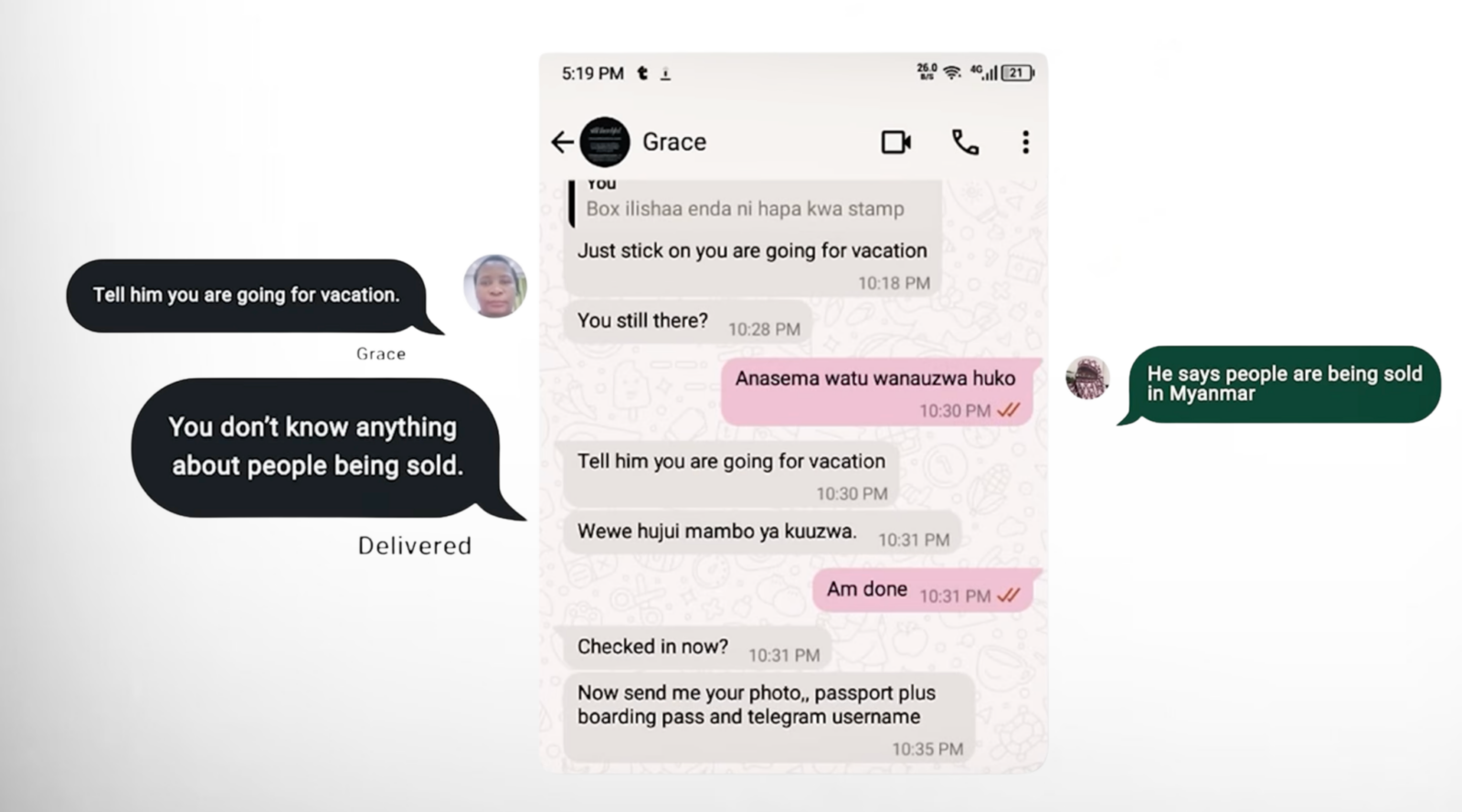
Disturbed, Kwamboka called Eshiwani to find out what was going on. He reassured her again that he was in Bangkok and that he was going to pick her.
Kwamboka did not realize that she had now gotten trapped in an underworld city
“They frisked us, they took our passports and phones, but they forgot to take one of my phones and directed me to the lady’s hostel. I had my phone, immediately I shared my location with Njuguna, my mum and a friend,” shared Kwamboka. “I texted them that this is the place where I am at, but it is not what I was expecting.”
Within minutes, soldiers reportedly came in, they started by slapping her, speaking a language she could not understand. One of the roommates told her that they wanted her phone. She handed it over.
At the camp where Kwamboka was, Samuel Wakoli, a Kenyan and a father of three had arrived days earlier. Wakoli’s agents were the same as Kwamboka, Njuguna and Eshiwani. Wakoli had paid KSh170,000 in two installments as processing fee.
This was not his first plan to leave Kenya. Wakoli had hoped to travel to Spain, but he could not afford the processing fee of KSh300,000. While still in Kenya, Njuguna advised Wakoli to first travel to Bangkok and work in a supermarket from where he will collect the money to take him to Spain.
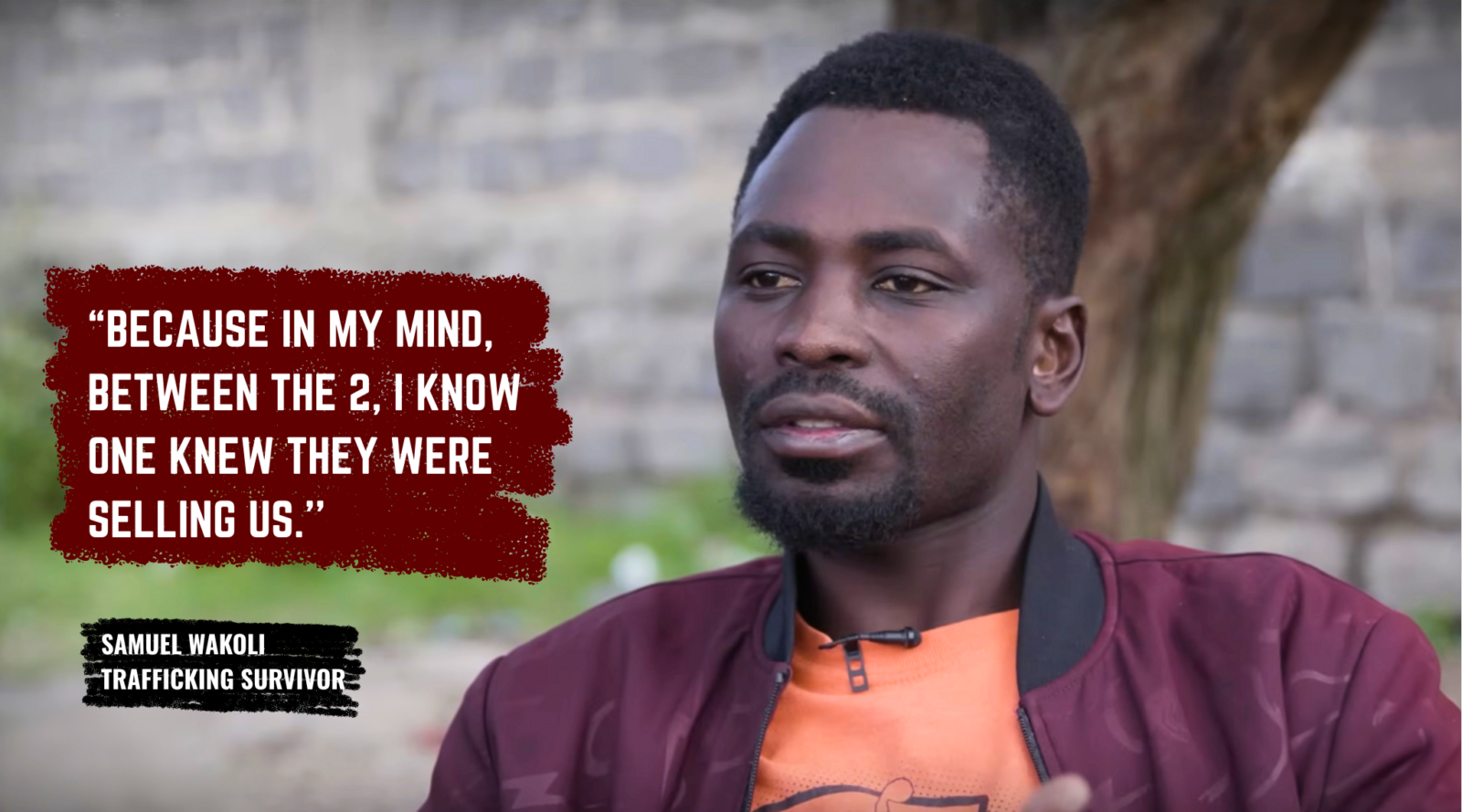
“Njuguna told me, because raising the required money has been difficult, there was an available job in Thailand. So I could go there and work for about three months, where I will be able to save some and go to Spain,” Wakoli said, noting that when he reached Bangkok the situation was far different from what he was promised.
Kwamboka and Wakoli were now slaves; doing strange tasks they did not understand. Trapped in a compound with high walls akin to a prison, forced labour in cyber scams, crypto currency theft and extortion stripped them of dignity and hope.
Their dreams quickly faded into a nightmare in the Hengxin camp, located in the mountains along the Thailand-Myanmar border. That is where Wakoli and Kwamboka say they were trapped, forced into a system where workers use fake identities and emotional manipulation to defraud victims across the world.
“Every day, you are given 50 phone numbers. So every day you talk to more than 1,000 people,” Wakoli said.
Reports from early 2026 by the Federal Bureau of Investigation’s FBI show that the scam centres in Southeast Asia have morphed into industrial-scale human trafficking operations involving cybercrime, money laundering and exploitation, trapping workers from East Africa and beyond.
“After like 2 weeks the boss held a meeting to set a target for each month. We were told that the money that we were supposed to make for the company was 700,000 dollars. Every person in that room broke down,” Wakoli said.
Wakoli endured brutal punishments for missing his targets. He was beaten, with thorn bats and electrocuted, suffering injuries that still affect him to this day.
As for Kwamboka, she held on to hope to survive and endured shameful acts at the hands of her captors. She was raped by her slave master on different occasions and ended up pregnant. Her captors forced her to swallow an abortion pill.
Kwamboka said after she swallowed the pill she bled for over a month.
Grace Eshiwani, John Njuguna and Jane Thiong’o, these are the people repeatedly identified as the agents sending Kenyans to the scamming camps in Southeast Asia.
Back in East Africa, families searched desperately for their missing loved ones.
Malcom (not real name) preferred to remain anonymous fearing retaliation from Ugandan traffickers.
“As you know, these things of recruiting people, it is like a big business, and so many people are in the business,” Malcom said.
He returned home in early 2024, days before Kwamboka and Wakoli’s arrival in Myanmar.
He knows the horror the two faced too well.
“They had something called a dark room. In the dark room they handcuff you, tie your hands and place you upside down and they subject you to torture for almost two weeks,” the 27-year-old information technology graduate said.
Malcom is back on the streets of Kampala, Uganda’s capital city, to rebuild his life. He carried, he carries deep scars from a year of inhumane treatment and was only able to return home after the Ugandan government arranged his rescue.
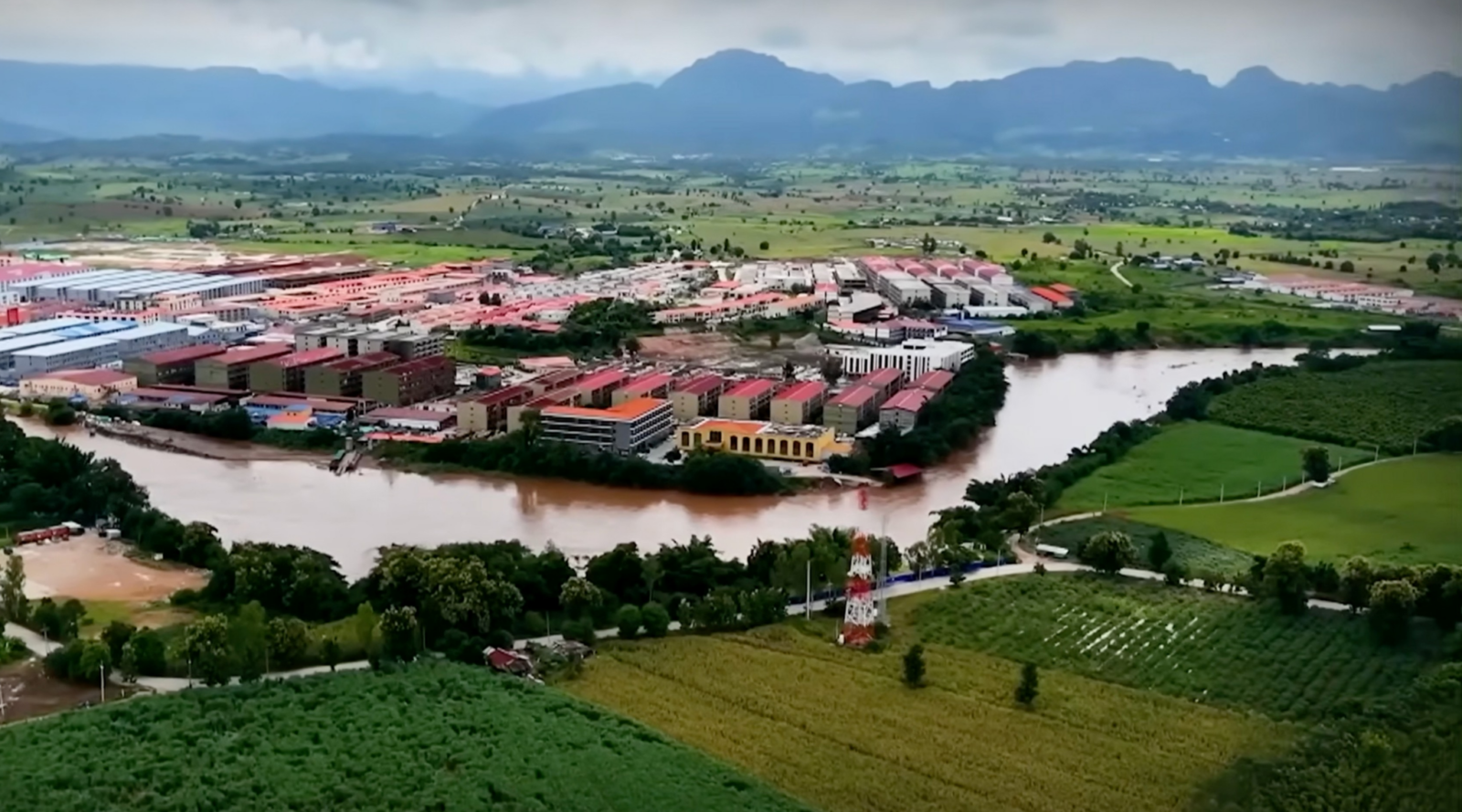
Mae Sot, a city at the Thailand-Myanmar border is the main gateway between the two countries. As a result, many of the victims of trafficking are brought here before being smuggled across the Awadi River into Myanmar.
Judah Turner, founder and director of Global Advanced Projects, has rescued dozens of trafficked individuals.
“At first, we didn’t really understand what was going on and didn’t identify what was happening, of course they come through the normal channels, the normal routes, getting on a flight into Bangkok and using Thailand as a transit country into Myanmar,” Turner said.
“More recently, those trends have become quite complicated and so now we’re seeing new trends where these African nations are flying into Malaysia where they don’t require visas. And illegally crossing the border of Malaysia into Thailand and then being trafficked down to Myanmar. “
In February 2021, a military coup plunged Myanmar into chaos, collapsing law and order.
From this emerged a sinister new economy. Once quiet frontier regions along Myanmar’s border with Thailand and China became fertile ground for fraud syndicates, who lured workers with fake job promises, cyber fraud and human trafficking.
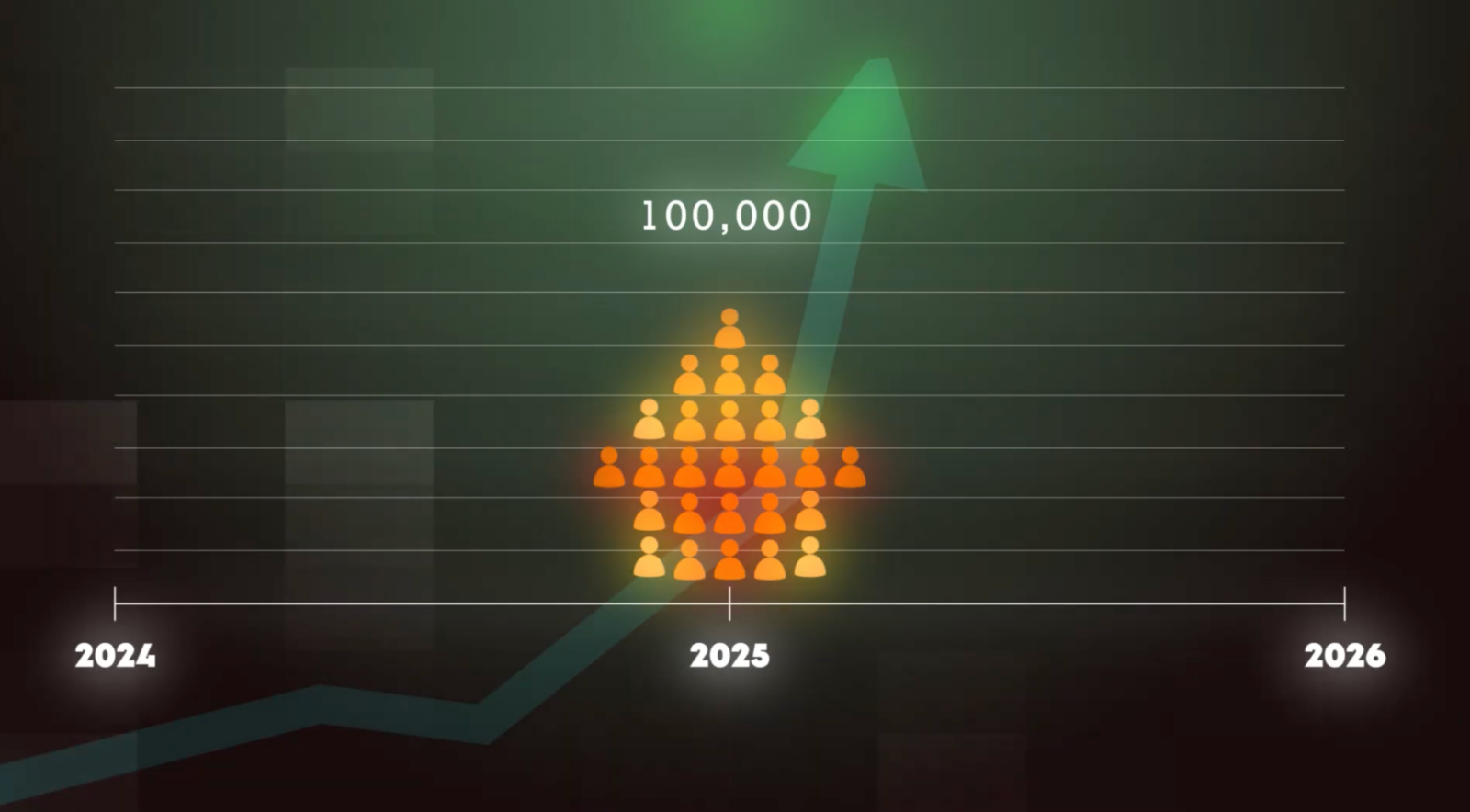
By 2025, Human Rights Monitors estimated that tens of thousands, possibly over 100,000 people were trapped in scam compounds in Myanmar.
“We’re talking about individuals who are being trafficked, no longer being low skilled, or people who are less educated, people actually who have academic degrees. “
The Nairobi-based anti-human trafficking organization’s chief executive officer, Winnie Mutevu, warns that the number of human trafficking cases could be higher as there are no proper channels in place to report them.
“What’s happening is the majority of the people who are being trafficked are young people, mainly between the ages of 19 to 35 years old. These are young and most of them are university graduates. So they have the skills and they know what it means to operate computers. So they are very specific on who they are going to target for this crime,” Mutevu said.
But who runs these networks?
Reports reveal a complex alliance of Chinese groups and local militias, some aligned with Myanmar’s junta. English-speaking victims from East Africa are heavily exploited as forced labour.
The United Nations Office on Drugs and Crime reports that over the past five years, human trafficking has surged. Governments in East Africa admit that this new trend has presented an enormous challenge.
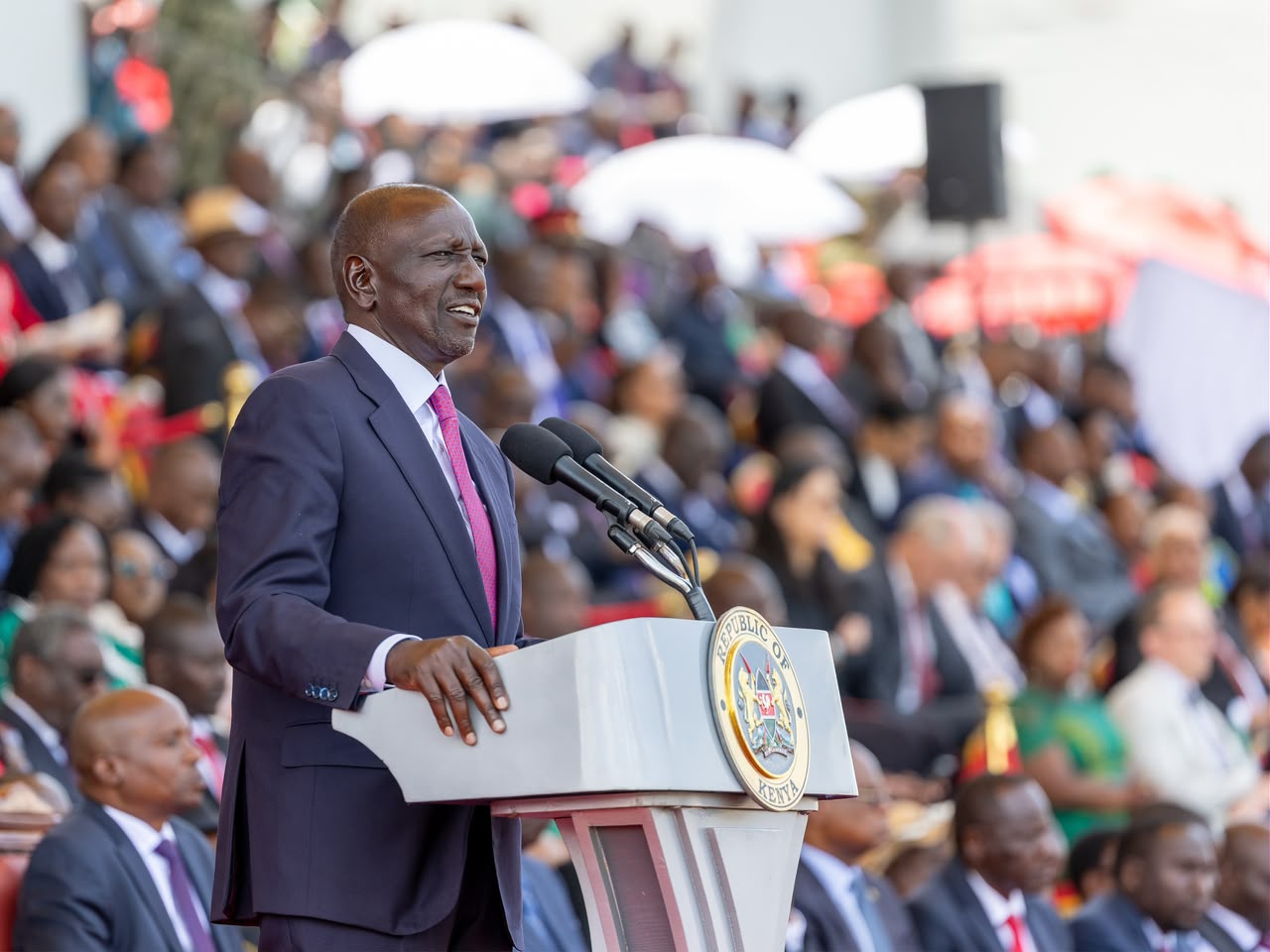
On April 5, 2025, while receiving 78 repatriated Kenyans from Myanmar at the Jomo Kenyatta International Airport, Principal Secretary Diaspora Affairs of Kenya, Roseline Njogu, asserted so as to curb the trend, the government will commence pre-departure checks.
For the better part of 2025 and into 2026, the government of Kenya has run an intensive media campaign making appeals to Kenyans to verify every job opportunity that they come across through the National Employment Authority that licenses recruitment agencies.
Apparently, Thiongo’s firm does not appear on the list of accredited agencies, nor any companies associated with Njuguna or Eshiwani.
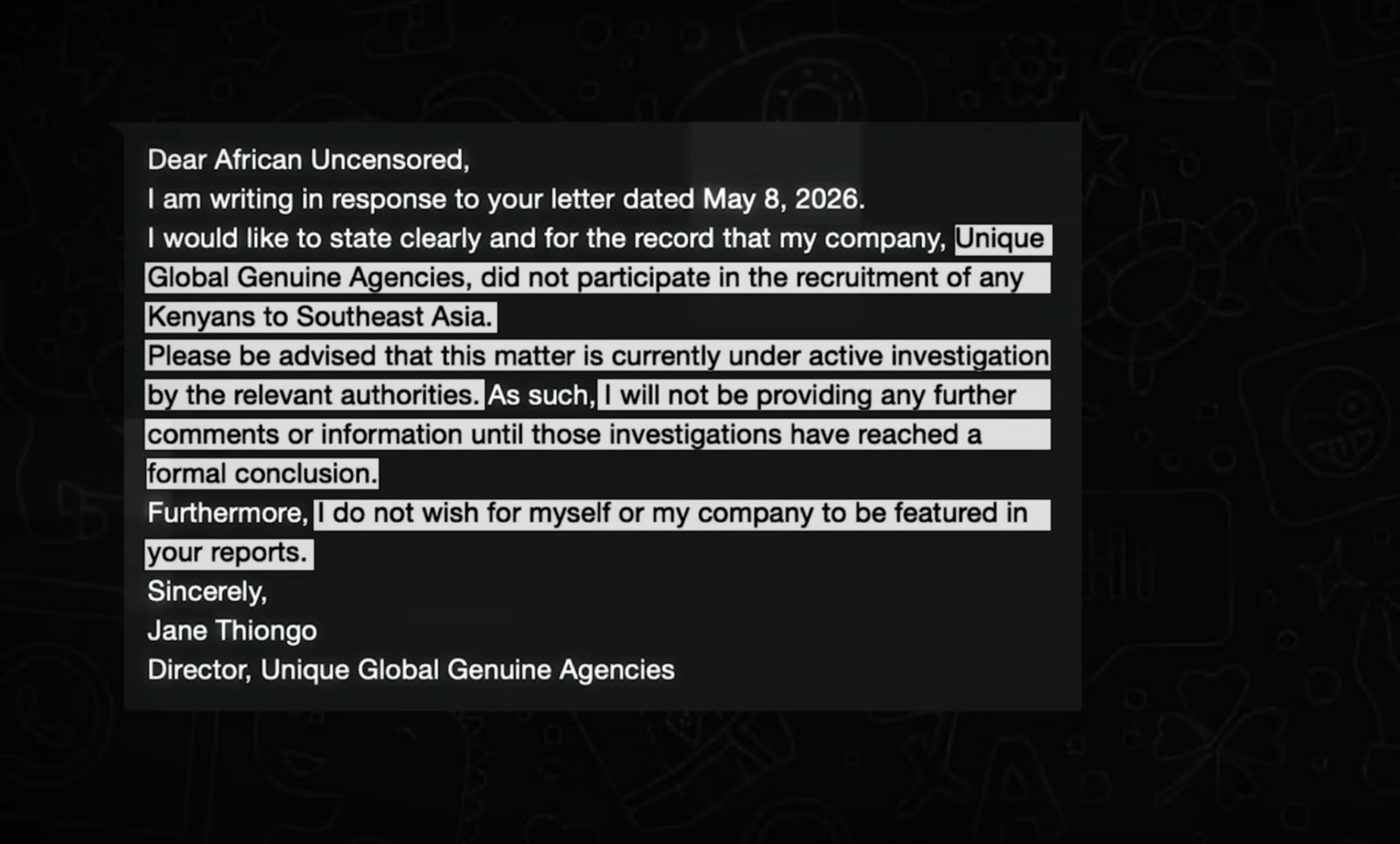
We contacted Jane Thiong’o, granting her a right of reply regarding allegations raised by findings from our investigation, linking her to Unique Global Genuine Agencies, in a written response sent in May 2026. Thiong’o denied that the agency participated in the recruitment of Kenyans to Southeast Asia and stated that the matter is currently under active investigation by authorities. She declined to provide further comment until the investigations are concluded and indicated that she did not wish for herself or the agency to be featured in this publication.
We reached out to John Njuguna and Grace Eshiwani through multiple phone calls and messages to afford them a right of reply on the allegations of human trafficking raised in this investigation. However, by the time of publication, neither had made themselves available for comment nor responded to the questions put to them.
Kwamboka and Wakoli were among 153 Kenyans repatriated by Kenya’s government. In Kampala, Uganda, Malcolm is living a day at a time.
Kwamboka has been reunited with her children.
Individuals named in this publication, Grace Eshiwani, John Njuguna and Jane Thiong’o, have previously appeared in media reports in relation to alleged recruitment activities.
As part of this investigation, Africa Uncensored in Kenya wrote to the Directorate of Criminal Investigations, the Office of the Director of Public Prosecutions and the State Department Diaspora affairs, specifically seeking comment on Eshiwani, Njuguna, and Thiong’o. We requested details on whether these individuals are under investigation or facing charges?
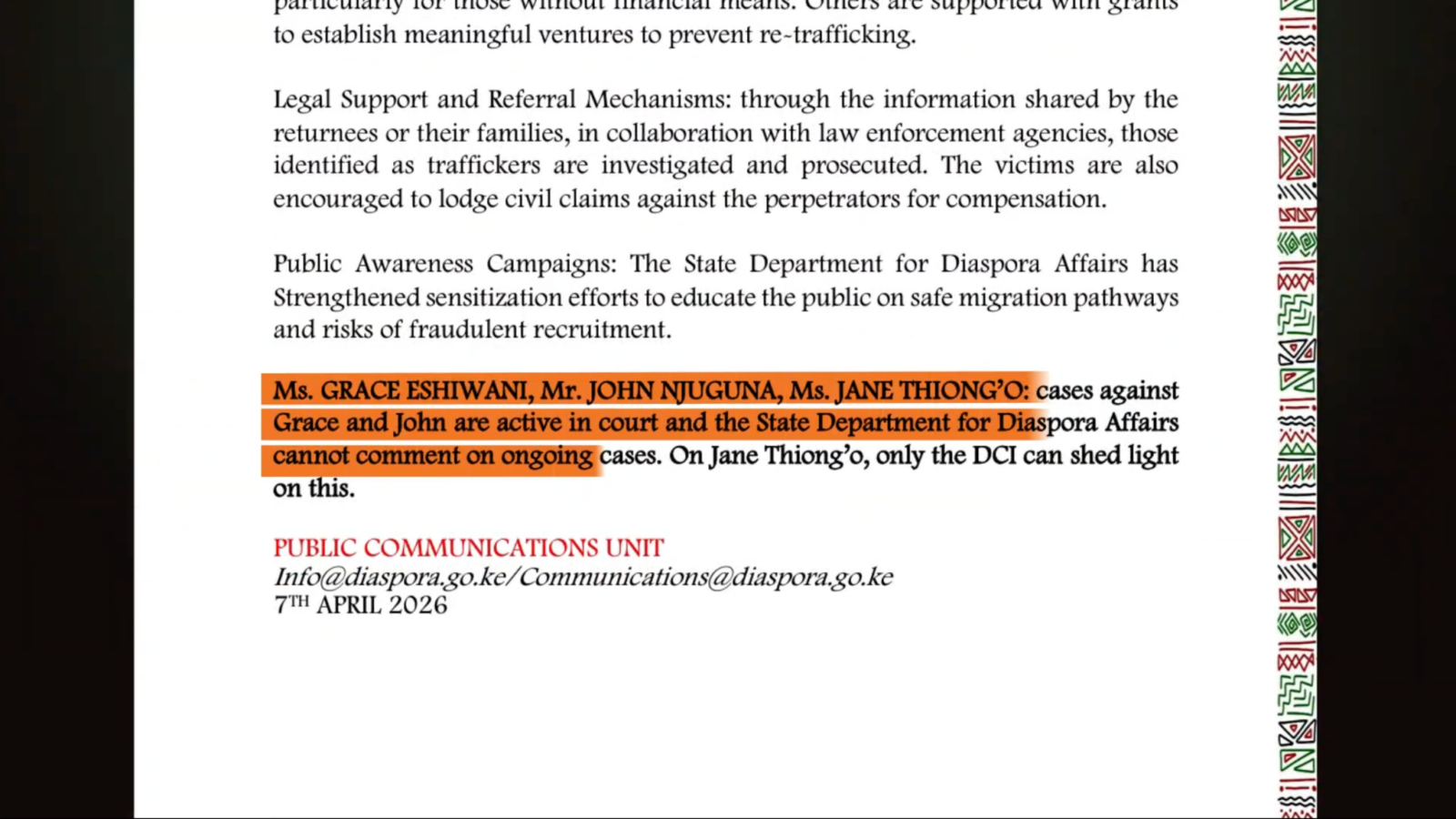
The status of any related cases and the identities of other suspects linked to these networks? By the time of this publication, the DCI and the ODPP had not responded. Only the State Department for Diaspora Affairs replied, confirming that at least 87 human trafficking cases are currently ongoing, and the department also confirming that cases involving Grace Eshiwani and John Njuguna are active before the courts and could not be discussed further, while indicating that any details regarding Jane Thiong’o fall under the mandate of the DCI.
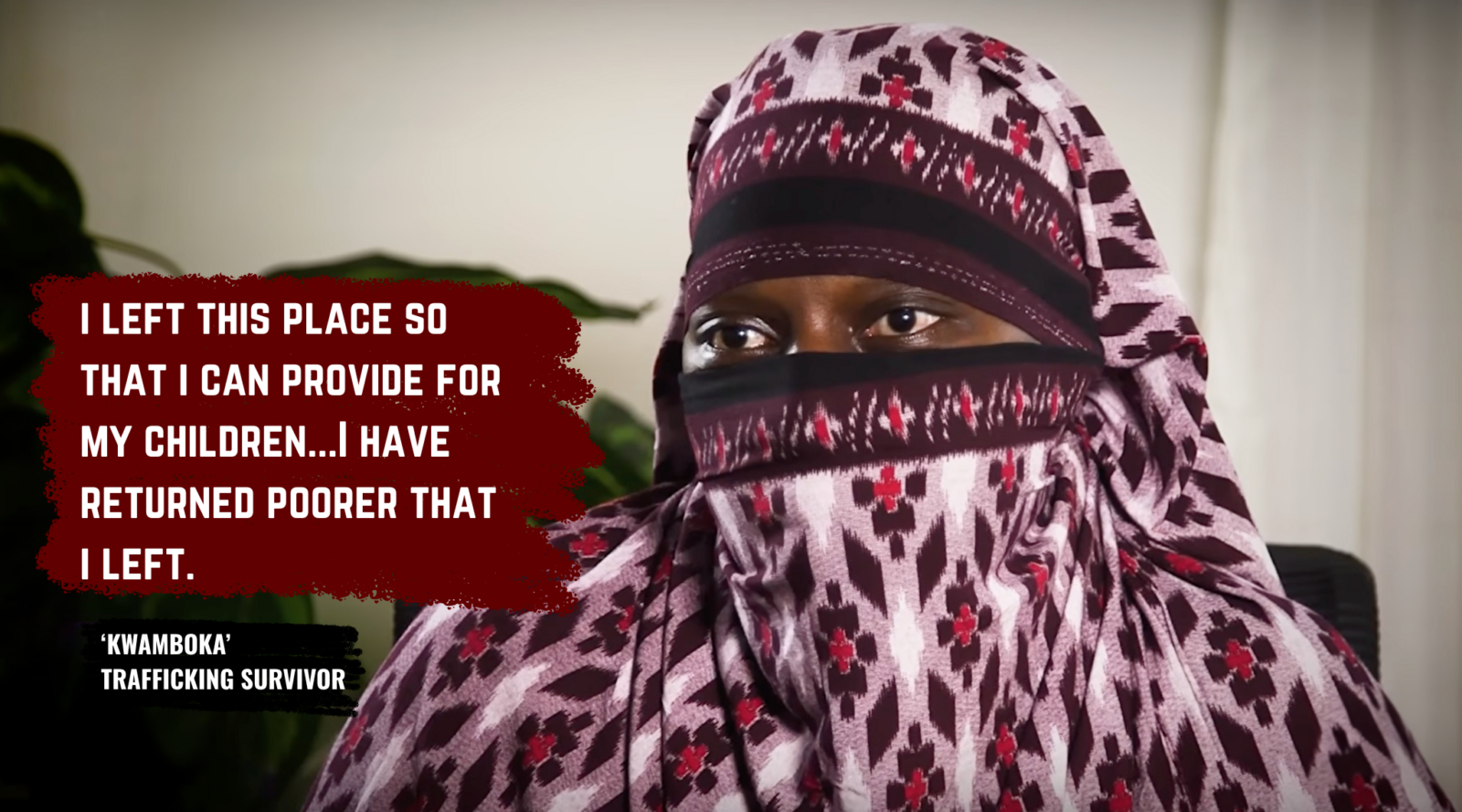
“I left here to provide for my daughters. I left this place with my money. Obviously, I have come back with nothing. I came back with slippers,” Kwamboka said while wiping tears, rolling down her cheeks.