
American giant tech-firm Tesla has brought the idea of flying cars closer to reality with a demonstration of a sports car capable of briefly leaving the ground, but the technology remains far from establishing a practical alternative to conventional road transport.
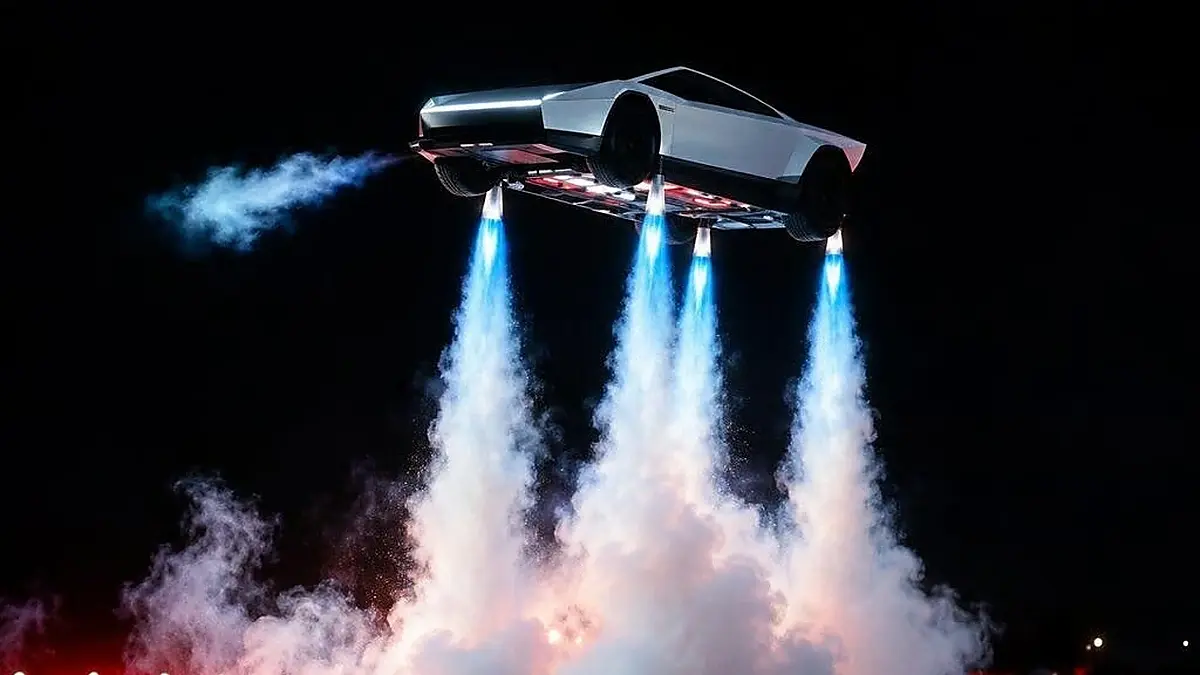
The American electric vehicle manufacturer unveiled a redesigned version of its second-generation Roadster on October 15, 2026, at a SpaceX facility in Texas, showcasing aerial manoeuvres nearly nine years after the vehicle was first announced.
The demonstration featured the prototype lifting above other Tesla vehicles, including the Cybertruck, Cybercab and Model Y. It also showed the car travelling upside down along a specially designed ramp before manoeuvring back towards the ground.
Tesla further demonstrated the vehicle’s acceleration, claiming it could reach 60 miles per hour (97 kilometres per hour) from a standstill in approximately 0.81 seconds.
The company is targeting 2028 for production, although several important questions remain about how the flying technology would operate outside a controlled demonstration environment.
How Tesla’s flying technology works
Unlike aircraft that rely on wings, rotors or propellers to generate lift, the experimental Roadster uses compressed-air thrusters developed in collaboration with SpaceX engineers.
The system stores high-pressure air in two tanks with a combined capacity of 600 litres. Ten thruster nozzles release controlled bursts of gas to generate thrust and influence the vehicle’s movement.
A separate fan-based suction system beneath the chassis produces downforce, allowing the car to remain attached to an inverted ramp during the demonstration.
While the engineering offers a glimpse of how rocket-inspired technology could be adapted for a road vehicle, it does not establish that the Roadster can function as an aircraft over meaningful distances.
Tesla has not disclosed the prototype’s maximum flight duration, operating altitude or airborne range. It has also yet to demonstrate sustained, controlled travel between destinations.
These limitations matter because a vehicle designed for everyday use would need to do more than perform brief aerial stunts. It would have to demonstrate reliable flight, safe landings and the ability to operate within established aviation regulations.
Flying car competition gains momentum
Tesla’s demonstration comes as other companies pursue vehicles intended to combine road travel with flight.
California-based Alef Aeronautics is developing its Model A electric flying car, which is designed to take off vertically and travel through the air.
The company released footage of its vehicle flying over a Tesla Roadster, presenting the demonstration as a response to Tesla’s entry into the emerging market. Alef also claimed the flight marked its 1,000th logged flight.
However, determining which company has produced the first flying car depends on how the term is defined.
Attempts to combine road transport and aviation date back decades. The Convair Model 118 ConvAirCar flew in 1947, while the Taylor Aerocar first took to the air in 1949 and received aircraft type certification in 1956. The Terrafugia Transition completed its first flight in 2009.
These projects illustrate that the concept is not new. The challenge has been developing vehicles that can meet the separate demands of roadworthiness, aviation safety, practicality and affordability.