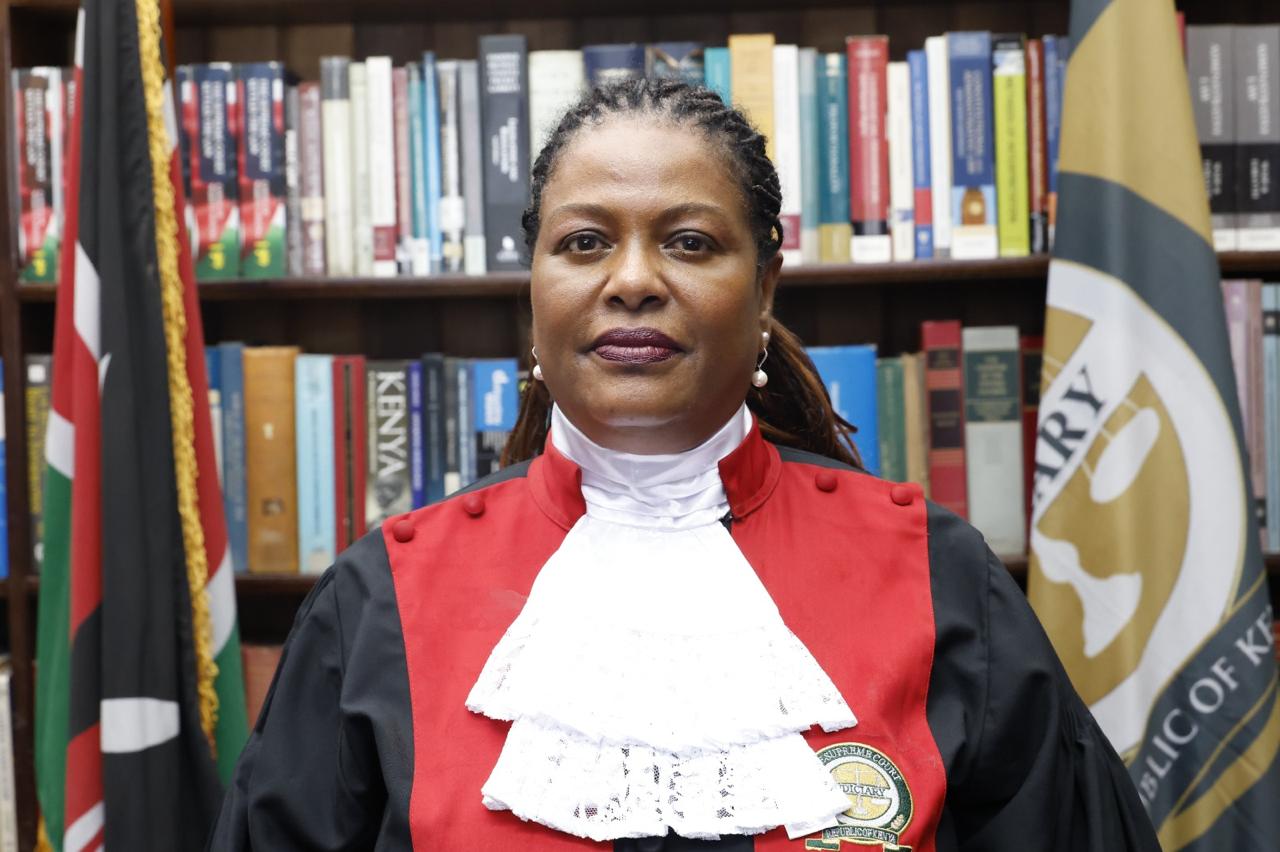
Kenya’s nomination of Lady Justice Njoki Ndungu, CBS, Judge of the Supreme Court of Kenya, as Kenya’s candidate for election as Judge of the International Criminal Court, is one of the most transparent, structured and merit-based international judicial nomination processes undertaken by the Republic.
Kenya has previously contributed distinguished judicial service to the ICC through Hon. Lady Justice Joyce Aluoch, who was elected as an ICC Judge on 20 January 2009 and served from 11 March 2009 to 10 March 2018. Her service remains a proud marker of Kenya’s contribution to international criminal justice and to the development of global jurisprudence.
The current nomination process was informed by prior experience. In 2022, Hon. Lady Justice Wanjiru Karanja, Judge of the Court of Appeal, had been nominated as Kenya’s candidate.
However, following the commencement of the campaign, the Ministry of Foreign Affairs advised, through a letter dated 20 September 2023, that Kenya withdraws the candidature in light of strategic considerations that could adversely affect its success. That decision was taken in good faith to preserve Kenya’s diplomatic goodwill and enhance its competitiveness in a future election cycle.
Following that withdrawal, the Government of Kenya, in consultation with the Judiciary and the Executive Office of the President, resolved to defer Kenya’s candidature to the 2026 election cycle.
This was not a retreat, but a strategic recalibration. It allowed sufficient time for reflection, diplomatic alignment and preparation of a stronger, more coordinated national candidature.
For the 2026 election cycle, the process was formally initiated by the Attorney General, Dorcas Oduor, through a letter dated 26 January 2026, following notification from the Secretariat of the Assembly of States Parties.
The Judiciary then instituted a transparent, competitive and merit-based process, inviting expressions of interest from eligible Judges of the superior courts.
Applications received were subjected to rigorous evaluation and transmitted to the Judicial Service Commission for consideration, in accordance with Article 36(4)(a) of the Rome Statute and Kenya’s constitutional and statutory framework governing judicial appointments.
Upon conclusion of this process, three candidates were recommended and forwarded for further consideration.
Thereafter, through a letter dated 25 February 2026, the Chief of Staff and Head of the Public Service, Mr. Felix Koskei, informed the Chief Justice and President of the Supreme Court, Martha Koome, that President William Ruto had nominated Lady Justice Njoki Ndung’u as Kenya’s candidate for election as Judge of the ICC.
The nomination was therefore the culmination of a structured national process, conducted in compliance with Article 36 of the Rome Statute and the requirements of the Advisory Committee on Nominations of Judges.
This degree of transparency is significant. Among Kenya’s international judicial nominations, the ICC process stands out as the clearest and most accountable.
The criteria, the initiating correspondence, the institutional consultations, the invitation for expressions of interest, the evaluation process, the role of the JSC, and the final communication of nomination are all traceable.
By comparison, other international judicial nomination processes, including Kenya’s procedure for nomination to the International Court of Justice, have not been presented to the Kenyan public with the same level of procedural detail.
Kenya’s ICC candidature was prepared through a transparent, consultative, merit-based and legally grounded process reflecting the seriousness with which Kenya approaches international judicial service.
The nomination of Lady Justice Njoki Ndungu should therefore be understood not merely as an individual candidature, but as a national candidature.
It represents Kenya’s commitment to international criminal justice, the rule of law, gender-responsive justice, victim-centred jurisprudence and Africa’s continued contribution to the shaping of international legal norms.