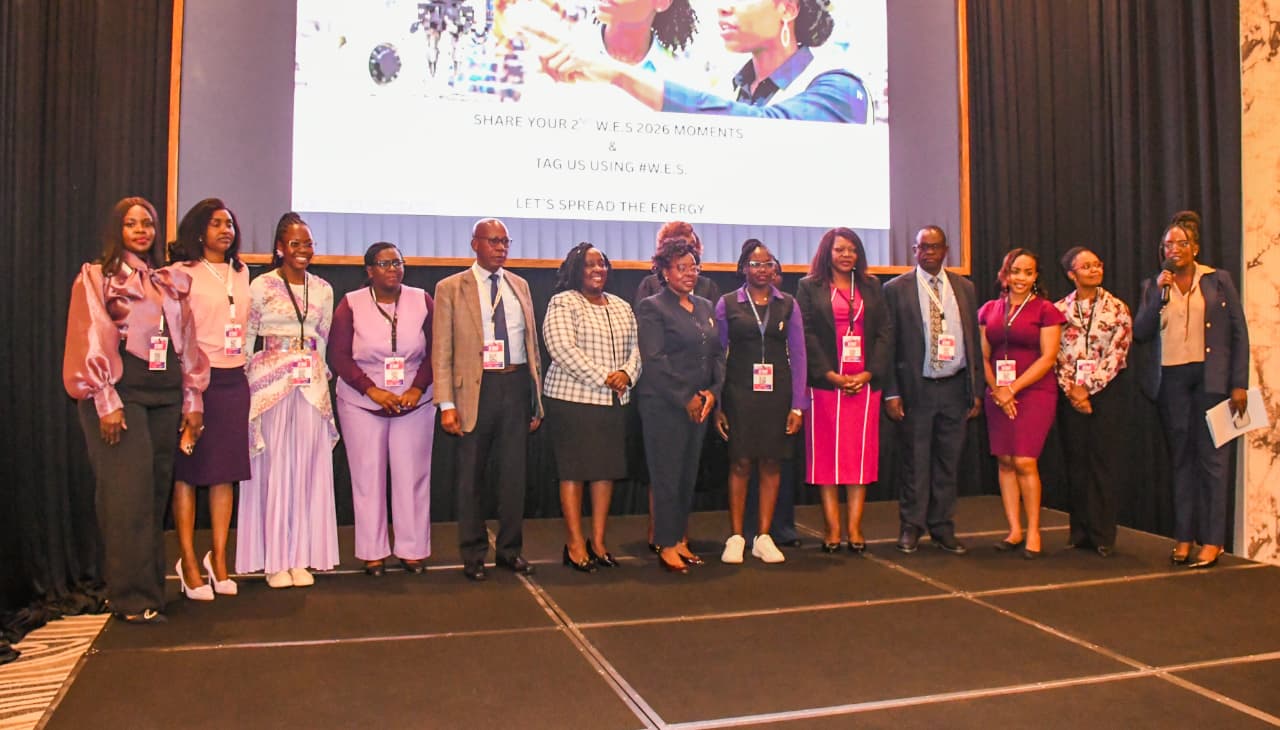
Women engineers have been challenged to take the lead in developing innovative solutions that will power Kenya’s future, as the Institution of Engineers of Kenya (IEK) opened its Second Women Engineers Summit in Nakuru.
The three-day summit, themed “Advancing Smart Intelligent Engineering Solutions for a Resilient Future,” has brought together engineers, policymakers, academics, industry leaders, development partners and students to explore how engineering can accelerate national development while promoting gender inclusion.
Speaking on behalf of First Lady Rachel Ruto, Chief of Staff Mary Mwende said Kenya’s aspirations in affordable housing, food security, clean energy, digital transformation and climate resilience depend on engineering innovation.
“The future is not something we inherit. It is something we engineer,” she said.
Mwende urged women engineers to embrace emerging technologies such as artificial intelligence, robotics and smart city innovations while ensuring technological advancement remains focused on improving people’s lives.
“As Artificial Intelligence advances, as smart cities emerge, as robotics reshape industries and as data becomes the world’s new currency, do not only ask, ‘What can technology do for our profession?’ Ask, ‘What should technology do for society?’ Because innovation without humanity is incomplete.”
She noted that engineering forms the backbone of essential services including water, roads, energy and digital infrastructure, despite often receiving little public recognition. She encouraged young women to overcome stereotypes and pursue engineering careers with confidence.
“Do not wait for conditions to change. Do not allow stereotypes to become ceilings. If someone tells you there is no place for women in engineering, just smile and build the future for yourself.”
IEK Caretaker Committee Chairperson Eng. Hillary Nyaanga said engineering remains critical to Kenya’s economic transformation, particularly as rapid urbanisation, climate change and digital technologies redefine the profession.
“Our growing cities require well-planned transport, housing, water, sanitation, energy and digital systems. These outcomes will depend not only on investment but also on the quality of engineering judgement applied at every stage,” he said.

Nyaanga stressed that diversity strengthens the profession, saying women must be part of leadership and key technical decision-making.
“Inclusion is not separate from excellence. It is one of the conditions for excellence. When women engineers advance into leadership and influence major technical decisions, the profession gains capacity and the country gains better solutions.”
Outgoing IEK Women Engineers Committee Chairperson Eng. Jennifer Gache said the summit continues to provide a platform for mentorship, leadership development, innovation and networking for women engineers.
She acknowledged that despite progress over the past two decades, women still face cultural, professional and structural barriers that hinder their growth.

According to the Engineers Board of Kenya, women make up only about 14 per cent of nearly 30,000 registered engineers in the country.
“Women engineers are not merely participants in engineering—we are innovators, leaders, entrepreneurs, policymakers and nation builders,” Gache said.
She also highlighted persistent challenges including low female enrolment in STEM courses, workplace bias, limited mentorship opportunities and underrepresentation in leadership.
“Engineers are only recognised when something goes wrong. If there is a nationwide blackout or the taps run dry, people ask where the engineers are. For women engineers, that recognition gap is even wider.”
Gache called for stronger partnerships to promote STEM education among girls, expand mentorship programmes, invest in internships and increase women’s participation in artificial intelligence and emerging technologies.
Participants also advocated for family-friendly workplace policies, leadership development initiatives and greater investment in mentorship to help women engineers advance throughout their careers.
The summit concludes that women engineers will play a pivotal role in designing resilient infrastructure, advancing sustainable technologies and delivering smart engineering solutions to support Kenya’s long-term development. Over the next three days, delegates will deliberate on artificial intelligence, climate resilience, entrepreneurship, digital transformation, financial empowerment and the future of engineering in Kenya.