The Ol Kalou Constituency is steadily building political momentum, with residents turning their attention to the anticipated by-election following the recent passing on of the late Member of Parliament David Kiaraho, while the latest Kenya Track Survey paints the picture of a competitive four-way contest shaped by grassroots influence, youthful energy, and policy-driven leadership.
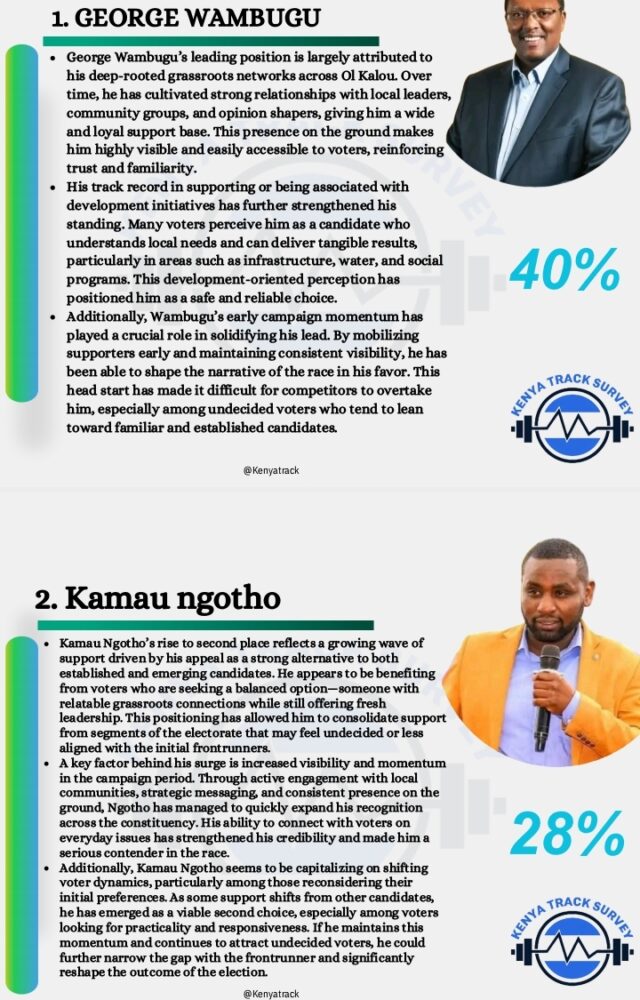
George Wambugu has emerged as the frontrunner, commanding 40 percent of voter support according to the survey findings. His lead is firmly anchored in deep-rooted grassroots networks cultivated over time through close engagement with local leaders, community groups, and opinion shapers. This strong presence has made him highly visible and accessible, reinforcing trust among voters. Many constituents associate him with development-oriented initiatives in key sectors such as water, infrastructure, and social programs, positioning him as a reliable and experienced choice. His early campaign momentum has further solidified his standing, allowing him to shape the narrative of the race and maintain a strategic advantage.
Kamau Ngotho follows in second place with 28 percent support, emerging as a strong and steadily rising contender. His growing appeal is driven by voters seeking a balanced alternative that blends grassroots connection with fresh leadership. Through consistent engagement on the ground and targeted messaging, Ngotho has expanded his visibility across the constituency, gaining traction among voters reconsidering their initial preferences. His ability to connect on everyday issues has enhanced his credibility, making him a formidable challenger capable of narrowing the gap.
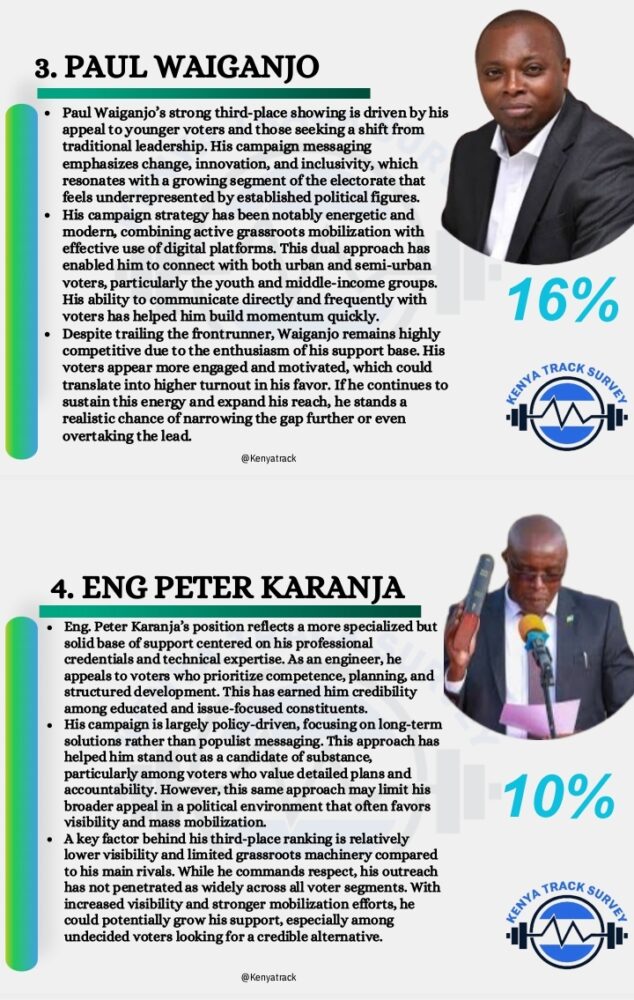
Paul Waiganjo ranks third with 16 percent, drawing significant backing from younger voters and those advocating for a shift from traditional political approaches. His campaign has distinguished itself through its energy and modern outlook, combining grassroots mobilization with an active digital presence. This strategy has enabled him to connect effectively with youth and middle-income earners, building an enthusiastic and engaged support base. Despite trailing the top two candidates, his momentum and voter enthusiasm position him as a candidate with the potential to influence the dynamics of the race.
Eng. Peter Karanja stands in fourth position with 10 percent, appealing primarily to voters who prioritize professionalism, technical expertise, and structured development. His policy-driven approach and emphasis on long-term planning have earned him respect among educated and issue-focused constituents. However, his relatively lower visibility and limited grassroots machinery have constrained his broader reach, leaving him behind the leading contenders despite his strong credentials.
A notable 6 percent of voters remain undecided, representing a critical segment that could shape the direction of the race once the electoral process formally begins. These voters are largely observing campaign developments, weighing candidate credibility, and awaiting possible endorsements from influential local leaders before making a final decision.
With residents now looking forward to the Independent Electoral and Boundaries Commission declaring the seat vacant and setting the official by-election date, political activity is expected to intensify, with candidates sharpening their strategies in a bid to win over the electorate.