There is something wonderfully ironic happening in Kenyan politics. President William Ruto appears to have borrowed Rigathi Gachagua’s political textbook. And he seems to be reading it carefully.
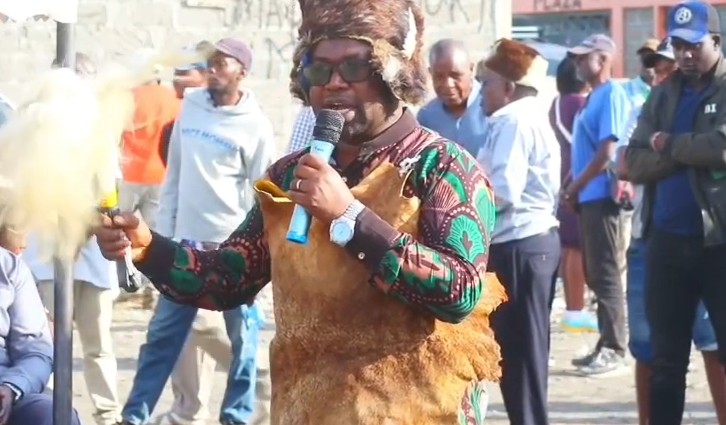
For about a year, Gachagua has been doing something many of his critics initially dismissed as village politics. He went home. He concentrated on Mt Kenya. Church after church, funeral after funeral, meeting after meeting, village after village, he worked on rebuilding and consolidating his political base.
While others were discussing national coalitions from Nairobi hotels, Riggy G was digging political trenches in the Mountain.
Now look at President Ruto. Suddenly, the Rift Valley requires serious presidential attention. The President is spending considerable political energy in his strongest territory, talking to leaders, addressing communities, inspecting projects and reassuring supporters.
One is tempted to ask: who copied whose homework? The late American politician Tip O’Neill, the legendary Speaker of the US House of Representatives, popularised one of politics’ simplest and most profound truths: “All politics is local.”
Rigathi Gachagua appears to understand this instinctively. And President Ruto, one of Kenya’s most experienced political operators, appears to be rediscovering it.
The mathematics is uncomplicated. Before you conquer Kenya, secure home. Before you start counting votes in Western, Ukambani, Nairobi, Coast and Mt Kenya, make sure nobody is quietly removing votes from underneath your bed in the Rift Valley.
That is Politics 101. Gachagua understood it following his dramatic political divorce from Ruto. His impeachment could have ended his political career. Instead, he attempted to transform humiliation into mobilisation.
He returned to his political base and told a simple story: we helped create this government, and then we were betrayed. Whether one accepts that narrative is beside the point. Politically, what matters is whether voters accept it.
Gachagua has repeated his message relentlessly. That repetition matters in politics. People sometimes imagine elections are won by producing brilliant policy documents and giving sophisticated television interviews. Those things matter, but politics is also emotional, repetitive and intensely personal.
You must show up.
Riggy G shows up.
A funeral becomes politics.
A church service becomes politics.
A roadside gathering becomes politics.
A cup of tea becomes politics.
Even an insult from an opponent becomes political capital. There is method in what sometimes looks like madness. President Ruto cannot ignore the lesson because his 2027 problem is fundamentally different from his 2022 challenge. In 2022, Ruto was the insurgent. He could blame government failures on President Uhuru Kenyatta while simultaneously presenting himself as the man who would fix them.
In 2027, there will be nowhere to hide. The economy will be his economy. The taxes will be his taxes. The debt will be his debt record. The employment situation will be judged as his. The health system will be his.
And every promise made in 2022 will return carrying a calculator.
That changes the political battlefield considerably. It explains why securing the Rift Valley becomes essential. Ruto cannot enter a difficult national election worrying about cracks inside the political house he has always considered home. If other regions become competitive while his traditional base develops significant leakage, the electoral arithmetic becomes extremely uncomfortable.
So, like Riggy G, he goes home.
There is nothing foolish about that strategy. In fact, the opposition would be foolish to ridicule it. Ruto remains a formidable campaigner. He understands political organisation, patronage networks, grassroots mobilisation and the psychology of electoral competition exceptionally well.
But here comes the delicious irony. Gachagua may have forced his former boss to play defence. For years, Ruto’s great political advantage was that everybody else reacted to him. He determined the tempo. He created the alliances. He travelled across other politicians’ strongholds while they worried about what he was doing.
Now the political picture is becoming more complicated.
Riggy G consolidates Mt Kenya.
Ruto reinforces the Rift Valley.
Other opposition leaders work to secure their respective constituencies. And gradually, the map of 2027 begins forming.
But there is an important warning for everyone involved.
Kenya cannot afford an election that becomes merely a competition between ethnic fortresses. “All politics is local” does not mean all politics must be tribal. A stronghold should be the foundation from which a politician builds a national coalition, not a wall behind which communities retreat from one another.
The eventual winner must answer a much larger question: what are you offering Kenya?That is where Ruto’s challenge becomes more difficult. A President seeking re-election cannot campaign entirely on promises because citizens have already given him the opportunity to govern. The opposition can ask voters to imagine tomorrow. An incumbent must explain yesterday and today.
Every marketplace becomes an audit. Every rally becomes an examination. Every promise invites the question: what happened to the previous one?
That is the burden of incumbency.
The United Alternative Government must understand the opportunity but also the danger. It cannot assume dissatisfaction with Ruto automatically translates into victory.
It must organise.
It must consolidate.
It must remain united.
Most importantly, it must ultimately present Kenyans with one credible presidential alternative capable of converting several regional political rivers into one national electoral ocean. Otherwise, Ruto can consolidate his fortress, exploit opposition divisions and survive.
This is why Gachagua’s lesson matters beyond Gachagua.
Politics is not won on social media alone. It is not won in television studios. It is certainly not won through opinion polls six months before voting.
Politics is organised from the ground upwards.
Village.
Ward.
Constituency.
County.
Region.
Nation.
Riggy G understood this and spent a year cementing his base. Now President Ruto appears to have received some advice of his own: before worrying about hostile territory, go home and make sure the Rift Valley house is properly locked.
And so the President has gone home. No stone is being left unturned. No political fence is being left unrepaired. No disgruntled supporter should remain disgruntled if something can be done about it. It is almost as though somewhere inside State House there is a well-thumbed little handbook entitled:
The Riggy G Guide to Political Survival.
Chapter One: Go home.
Chapter Two: Secure your people.
Chapter Three: Never assume your stronghold is permanently yours.
Chapter Four: Only after completing Chapters One to Three should you start dreaming about Kenya.
The student is formidable. But, for the moment, the teacher must surely be smiling. Because in the emerging battle for 2027, William Ruto appears to be following a strategy Rigathi Gachagua has been practising for the better part of a year.
Tip O’Neill told us long ago why.
All politics is local.
And 2027 may ultimately belong to whoever understands that lesson best, without forgetting that Kenya itself must remain bigger than every political backyard.