
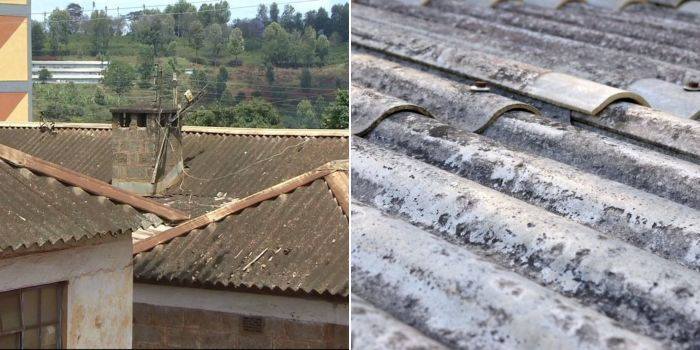
A fresh wave of concern is sweeping through Kenya’s health sector after members of the Senate Committee on Health sounded the alarm over the continued presence of asbestos roofing in several public hospitals.
The legislators, led by Uasin Gishu Senator Jackson Mandago, alongside Kisii Senator Richard Onyonga and Baringo Senator Vincent Chemitei, criticised what they described as a glaring contradiction in government policy investing heavily in cancer prevention and treatment while patients and healthcare workers remain exposed to hazardous materials within medical facilities.
Speaking in Iten, Elgeyo Marakwet County, the senators termed the situation “absurd,” noting that hospitals spaces meant for healing should not pose additional health risks.
Asbestos, commonly used in older buildings, is widely recognised as a serious health hazard. The World Health Organization classifies all forms of asbestos as carcinogenic, linking exposure to diseases such as lung cancer, mesothelioma, and chronic respiratory conditions.
When asbestos-containing materials deteriorate or are disturbed, they release microscopic fibres into the air. These fibres can be inhaled and remain in the lungs for years, causing long-term damage.
The senators warned that continued exposure in public hospitals undermines national efforts to combat cancer, now among the leading causes of death in Kenya.
The concerns come despite a prior government directive requiring the removal of asbestos roofing from both public and private buildings.
Environment Cabinet Secretary Deborah Baraza had set a June 2025 deadline for property owners to safely dispose of asbestos materials at their own cost.
However, lawmakers noted that compliance has been slow, raising questions about enforcement and public safety.
Beyond infrastructure concerns, the committee also turned its attention to congestion in public mortuaries, which they say has reached critical levels.
To address the issue, the senators proposed a joint initiative between the Ministry of Health and the Ministry of Interior to establish police-run morgues in all counties.
The facilities would primarily handle unclaimed bodies, especially those tied to ongoing investigations.
According to the committee, the move would ease pressure on hospital mortuaries while ensuring more dignified and efficient management of the deceased.
The unfolding debate highlights broader challenges in aligning public health policy with on-the-ground realities.
As the government continues to scale up investments in healthcare and cancer treatment, pressure is mounting to ensure that hospital environments themselves do not pose hidden dangers.
The Senate committee is now urging swift action to eliminate asbestos risks and improve infrastructure, warning that delays could have long-term consequences for both patients and healthcare workers.