
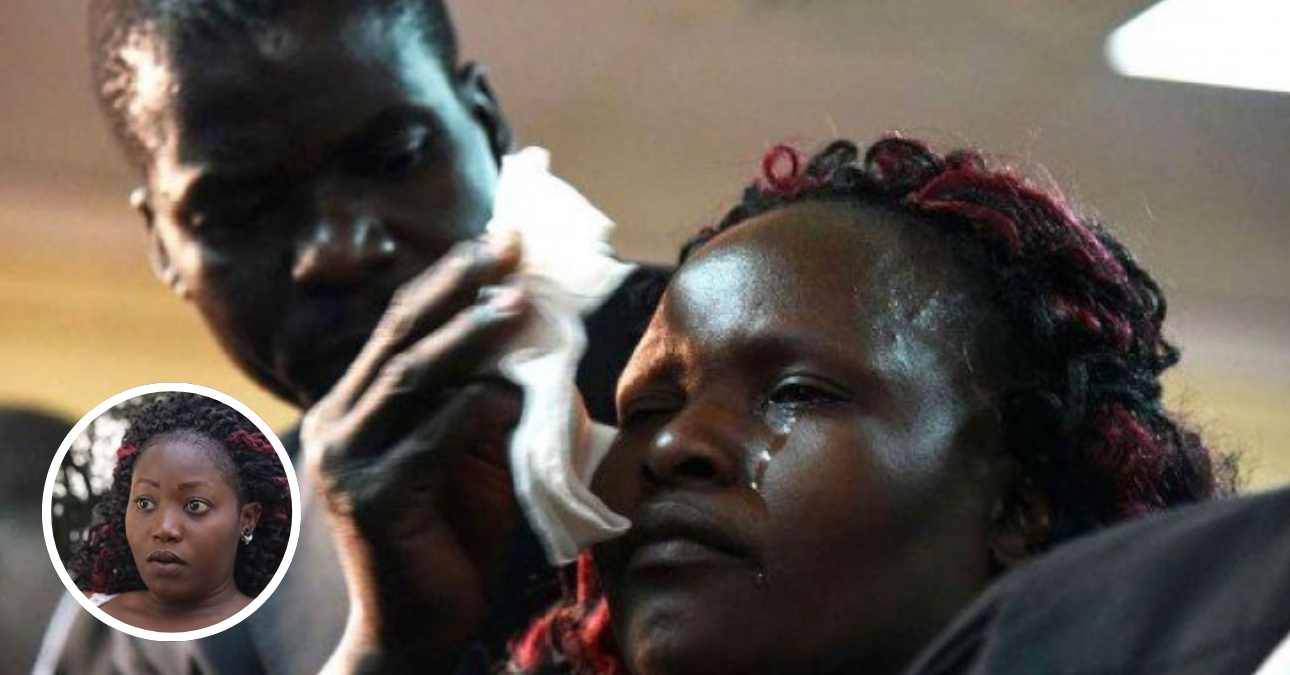
The family of slain Rongo University student Sharon Otieno has asked the High Court to consider compensation, saying it spent about Sh3.5 million on her funeral and burial and a further Sh1.2 million on travel, accommodation and meals during the lengthy court proceedings.
The family said the expenses arising from Sharon’s murder and the nearly eight-year court battle had left it financially strained and emotionally traumatised.
In a Victim Impact Statement contained in a probation report filed ahead of sentencing, the family said it had been forced to sell a one-acre piece of land and a cow to meet expenses related to Sharon’s murder, funeral and court proceedings.
The family told probation officers that it had struggled to meet the immediate and long-term needs of Sharon’s three children, her ageing parents and siblings.
The report estimates that the family spent about Sh1.2 million on travel, accommodation and meals while attending court proceedings in Nairobi over the past seven to eight years.
It puts the cost of Sharon’s funeral and burial at approximately Sh3.5 million, bringing the total expenses cited by the family to about Sh4.7 million.
The family said the financial burden had left it unable to adequately meet basic needs, particularly education, healthcare, food and housing.
“The victim family prays for compensation,” the report states, noting that the family had depleted its resources and was no longer able to meet its obligations.
The family has also asked the court to consider orders that would help ease the financial difficulties caused by Sharon’s death and the lengthy trial.
Beyond the financial impact, the family told probation officers that it had endured emotional distress, trauma, psychological suffering and anxiety for nearly eight years.
It has therefore sought psychological and trauma counselling to help members cope with the loss and begin the healing process.
The report says Sharon’s death not only robbed the family of a daughter and sister but also left her three children without their mother.
It identifies Sharon’s children, parents and siblings as secondary victims who have continued to experience grief, psychological trauma and economic vulnerability.
The family further complained that its suffering had been compounded by what it described as persistent negative exposure on social media and mainstream media. It said the coverage had affected its dignity and caused anxiety.
The family also expressed concerns about its safety, particularly because some people linked to the case remain at large. It said it feared possible retaliation or negative reactions following the final judgment.
On reconciliation, the report says efforts were made to engage the families of the accused persons, although the process produced different outcomes.
Representatives of former Migori Governor Zachariah Okoth Obado’s family attended a reconciliation meeting with Sharon’s family on August 10, 2026.
During the meeting, Obado’s family acknowledged that he had made commitments to Sharon and indicated that they remained willing to fulfil them.
According to the probation report, honouring those commitments could help address some of the needs of Sharon’s children.
A separate meeting was held with representatives of the second accused’s family, although the engagement did not result in an amicable reconciliation or substantive deliberations.
The report says no reconciliation efforts were initiated by the family of the third accused.
The probation officer noted that no sentence could restore Sharon’s life or erase the pain suffered by her loved ones. However, the officer urged the court to consider interventions aimed at stabilising the family and securing the future of the children.
The report further notes that the commitments made during the reconciliation process could provide a pathway towards addressing some of the family’s immediate needs, independently of the court’s eventual sentence.
Principal Probation Officer Salome Muthoni has recommended that the High Court consider the totality of the findings in the report when determining the sentences against Obado and his co-accused.
Meanwhile the High Court has set September 16, 2026, for the sentencing hearing of former Migori Governor Okoth Obado and two others following their conviction for the murder of Sharon Otieno.
The date was set after a probation officer presented a victim impact report detailing the effects of Sharon’s murder on her family.
The prosecution and defence teams have been directed to file and serve their respective submissions ahead of the sentencing hearing.
Obado and his co-accused were found guilty in connection with Sharon’s murder. Her body was discovered in Homa Bay County in September 2018.
During the sentencing hearing, the court will consider the victim impact report, submissions from both parties and other relevant factors before determining the appropriate sentence.
The family is expected to make its submissions on sentencing when the matter comes up before the High Court on September 16.