
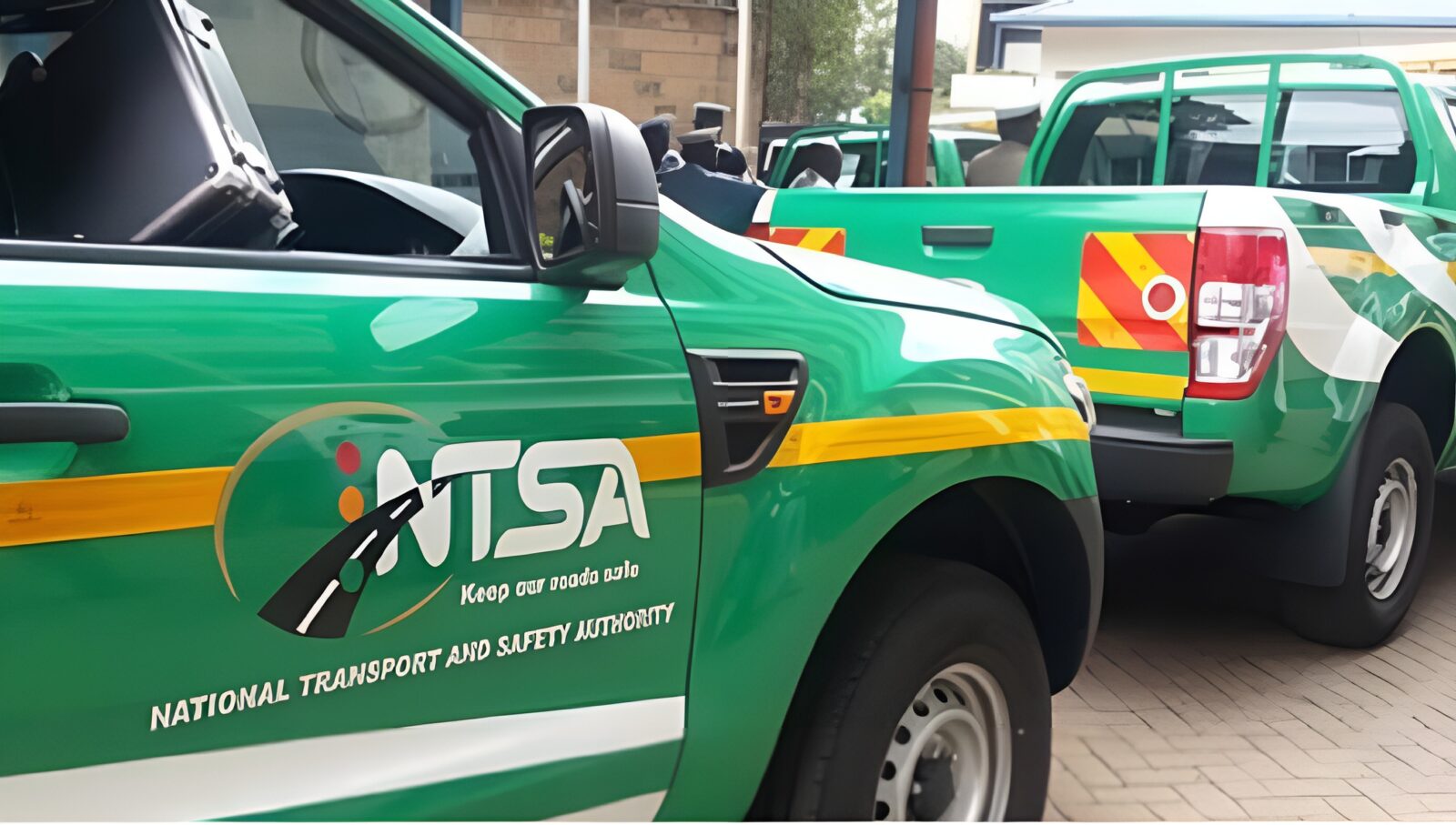
NTSA Director General Nashon Kondiwa has broken down exactly what happens during a vehicle inspection, offering Kenyans a clearer picture of what the authority looks for and why.
In an interview on NTV’s Fixing the Nation, Kondiwa explained that inspection begins with confirming a vehicle’s identity, matching its physical features against what is recorded in the NTSA registry.
“You want to be sure that the vehicle that is presented for inspection is the vehicle registered. You basically look at the chassis number, the Vehicle Identification Number of the vehicle, the details as you have it in the registry of motor vehicles at NTSA,” he said.
He added that officers also confirm details such as weight and colour against official records, partly to flag stolen vehicles that may otherwise circulate undetected on Kenyan roads.
The second stage focuses on mechanical condition, covering elements such as brakes, suspension, and headlights.
Kondiwa pointed specifically to the issue of blinding headlights, explaining that lighting is engineered with safety angles in mind to avoid dazzling oncoming drivers.
“If you’re keen, for us who drive on the left, the right side of the vehicle actually has a weaker light, because the oncoming vehicle should not be blinded. So when you see a whole strip of white light covering the entire vehicle, that is a danger,” he said.
He noted that this is precisely why physical inspection remains necessary rather than relying solely on paperwork.
Inspections also include emission testing, assessing the environmental impact of a vehicle’s exhaust output, as well as use-based requirements depending on a vehicle’s purpose.
Kondiwa cited the example of commercial vehicles, which are now required to carry reflective lighting around their bodies.
“We are able to check the material used. It’s not just any yellow thing. The material used, is it reflective or not?” he stated.
When pushed on enforcement gaps, particularly the visible presence of poorly maintained or non-compliant vehicles still operating on Kenyan roads, Kondiwa acknowledged that inspection alone is not the full solution.
He said NTSA is placing greater emphasis on continuous enforcement and user behaviour, noting that a vehicle can pass inspection and still go missing or deteriorate significantly within the following year.
“It’s not just inspection in isolation. There is inspection and there is compliance and enforcement, which again, I must say, we are completely transforming. We are making it more technology-based and we are adding more workforce into it,” he said.
He revealed that NTSA is working with the National Police Service to deploy consistent officers for road enforcement, drawing on past experience to make his case.
He noted that road fatalities had previously declined when NTSA maintained an active enforcement presence up until 2017, but began rising again once that presence was scaled back.
“We’re changing all that story,” he said.