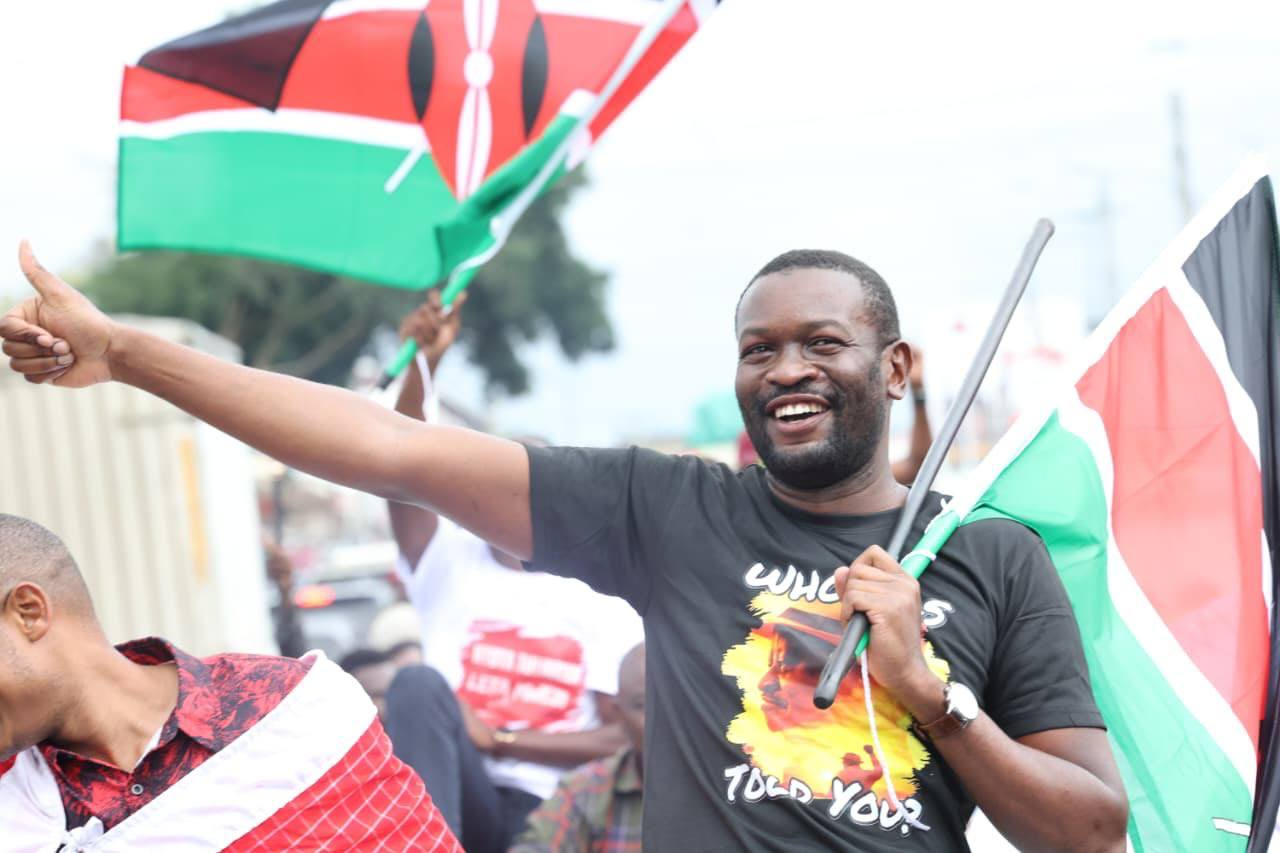
The debate over the 2027 General Election took center stage on TV47 Prime on July 8, 2026 as a panel of experts offered sharply contrasting views on the prospects of Nairobi Senator Edwin Sifuna and the opposition’s strategy ahead of the next Presidential contest.
Lawyer and political analyst Brian Weke argued that Sifuna’s growing influence across the country is positioning him as a formidable force in opposition politics, particularly in the Western region.
“Sifuna stands for many serious issues, and the way he is being received all over the country I can tell you what will happen in Western.
If you are not with Sifuna, you are definitely going home,” Weke said.
Weke also defended the opposition’s decision to keep its presidential candidate under wraps, describing it as a deliberate political strategy.
“As Linda Mwananchi, we have the resources, and our resource is the people.
The opposition know who their candidate is, it is a strategy, we do not want to give them fodder,” he added.
However, strategic advisor Fred Okango dismissed suggestions that Sifuna is on course to become Kenya’s next president, arguing that the 2027 election will be won through political alliances and numerical calculations rather than individual popularity.
“Sifuna will not be President of the Republic of Kenya in 2027. The reason is because the election that we are going to go into is an election that will require a lot of arithmetic,” Okango said.
He further criticized the opposition’s approach, accusing it of focusing on complaints instead of presenting solutions to Kenyans.
“The opposition is playing politics of grievance, not governance. These people are grieving all the time,” he stated.
Advocate of the High Court Dr. Martin Oloo challenged the belief that access to resources and state power automatically translates into electoral success, citing the 2002 presidential election as an example.
“In 2002, when Uhuru first came, KANU had money, Moi was in power.
If the issue is about money, then Moi should have helped Uhuru to take over in 2002.
Kibaki was not the best of the candidates in 2002, but he was the compromised candidate,” Oloo explained.
He also cautioned against drawing direct comparisons between Kenya and other countries when discussing governance and political transitions.
“Kenya cannot be run on examples of other countries,” he said.Governance and policy analyst Prof. Gitile Naituli weighed in on the discussion by suggesting that President William Ruto’s current support base should not be viewed as a guarantee of electoral success.
“The same people supporting William Ruto today are the same people who never made Raila President,” he observed.
The professor also raised concerns about the opposition’s relationship with the electoral process ahead of the next polls.
“The opposition should know that they have Ruto’s IEBC, they don’t have an IEBC,” he remarked.
On the possibility of Sifuna ascending to the presidency, Prof. Gitile suggested such an outcome could usher in a significant political shift in the country.
“If Sifuna becomes President, this country may very well go where it would have gone if Jaramogi became President,” he said.
The discussion highlighted the competing schools of thought emerging around the 2027 presidential race, with questions of leadership, coalition-building, governance and electoral strategy already shaping political conversations across the country.